





1st Edition
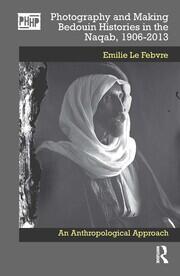
Photography and Making Bedouin Histories in the Naqab, 1906-2013 An Anthropological Approach
Preface: Ethnonyms and Being Bedouin Introduction: Contours of Place, People, and Ethnography Part One – Histories 1. Naqab Bedouin Social History and Historiography 2. Making Histories in a Bedouin Society Part Two – Photography 3. Anthropology of Bedouin Photography and Photographs 4. Photographic Presences and Entangled Visual Economies Part Three – Photographs 5. Circulating Images: Tribal Histories of Lineages 6. Circulating Images: Community Histories Conclusion: Historical Persuasion and Photographs in the Desert
Biography
Emilie Le Febvre received her DPhil and MSc from the Institute of Social and Cultural Anthropology at the University of Oxford.
Emilie Le Febvre’s book, Photography and Making Bedouin Histories in the Naqab, 1906–2013, is a truly original exploration of how the Bedouin of the Naqab have used the unique qualities of photographs to turn them into ‘objects of historical persuasion’ to evidence their longstanding presence in the region. Her book is the first of its kind to bridge the anthropology of Bedouin and visual culture, and offers a refreshing interpretation of how a cultural landscape and its objects (photographs) can be understood in the study of the Middle East.
- Dawn Chatty, Professor Emerita of International Development Studies, University of Oxford
