




1st Edition
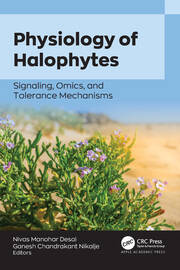
Physiology of Halophytes Signaling, Omics, and Tolerance Mechanisms
1. Metabolomic Studies of Halophytes Under Salinity Stress
Vibha Gupta
2. Role of Halophyte-Microbes Duo in Environmental Clean-Up
Minal Trivedi, Divya Raul, and Ganesh Chandrakant Nikalje
3. Endophyte-Assisted Salinity Tolerance in Halophytes
Deepak B. Shelke, Mahadev R. Chambhare, Kamlakar More, Hiralal B. Sonawane, and Ganesh C. Nikalje
4. Salt Signaling in Halophytes
Joshi. A. Samiksh
5. Metabolomic, Proteomic, and Ionomic Adjustment and Adaptive Mechanism of Halophytes
Ritu L. Jain
6. Habitat, Growth Response, and Adaptation under Salinity in Sonneratia sp.
Raul D, Pawar GP, Telave AB, Patil JR, and Nikalje GC
7. Physiology and Potential Applications of Sand Dune Halophytes
Ganesh Pawar and Ajit Telave
8. Physiological Responses of Halophytes to Salinity: A Review
Darshana Patil, Priyanka Gupta, and Avinash Patil
9. Adaptive Pathways of Halophytes and the Prospects of Increasing Plant Salinity Tolerance
Chirag U. Narayankar, Sudarshan T. Charapale, Umesh R. Pawar, Manasi S. Patil, and D. K. Gaikwad
10. Halophilic Cyanobacteria and Microalgae: Role in Environmental Clean-Up and Value-Added Products
Madhulika Gupta
11. Structural Hierarchy Imparts Salinity Stress Tolerance Improvement in the Halophyte Sesuvium portulacastrum L.
Vinayak H. Lokhande
12. Halophytes: Prospectives and Perspectives for Sustainable, Eco-Friendly, Environmental, and Agricultural Development
Vinayak H. Lokhande
13. Physiological, Proteomics, and Metabolomics Approaches for Elucidation of Salinity and Alkalinity Tolerance of Halophytes
Asha Kumari, Monika Patel, and Asish Kumar Parida
14. Reactive Oxygen Species and Oxidative Damage in Halophytes Under Salt Stress
Mali Ram Hindala, Ridhi Joshi, and Vidya Patni
15. Halophyte Adaptation is Nature‘s Prodigy for Environmental Changes
Laxmishree S. Chengala
16. Adaptive Strategies and Role of Endophytes in Halophytes for Amelioration of Salt Stress
Shreyasi Biswas and Mahuya Mukhopadhyay
17. Potential Role of Halophytes in Environmental Clean-Up
Bhushan P. Bhusare, Ganesh Chandrakant Nikalje, Ramesh R. Sanap, and Amit D. Kale
18. Halophytes as Reservoirs of Stress-Mitigating Proteins and Osmolytes
Sunil P. Bhagat, Jayant P. Rathod, Vidya R. Kothari, Satyam D. Pawar, and Harichandra A. Nikule
19. Salicornia brachiata: A Potential Halophyte of Coastal Ecosystem Having Ecological and Economic Significance
Asish Kumar Parida and Monika Patel
Biography
Nivas Manohar Desai, PhD, is a Fellow of the Association of Plant Science Research as well as Assistant Professor of Botany and Plant Protection at Sadguru Gadage Maharaj College, Maharashtra, India. With over 15 years of experience in the field of plant science research, Dr. Desai has published international and national papers as well as many book chapters and edited eight books. His research areas are marine botany, plant physiology, functional foods, and photochemistry. He holds three Australian and six Indian patents. He has attended more than 30 international and national conferences. He is also the recipient of several young scientist awards and one research excellence award.
Ganesh Chandrakant Nikalje, PhD, is an Assistant Professor of Botany at R. K. Talreja College, Ulhasnagar (affiliated to University of Mumbai), India. His major areas of resear ch are unravelling the salt adaptation mechanism of halophytes, development of bio-saline agriculture, phytoremediation, endophyte-assisted growth promotion and stress tolerance in plants, and assessment of wild vegetables for nutritional and value-added products. He is serving as an editor and reviewer for several international journals. He has been invited as a resource person for different conferences and symposia. To date, he has published three books, over 20 research/review papers in international journals, and over 16 book chapters in edited books for international publishers.
"Highlights the important research outcome in halophytes. . . . A superb job of compiling chapters from contributing authors on a broad range of topics, including physiological and biochemical mechanisms, compatible solutes, signaling, regulatory components, in addition to halophilic cyanobacteria and microalgae, halophyte-associated microbes, endophytes, adaptive pathways. The book has also relevant chapters on the role of halophytes in eco-friendly environmental and agricultural practices and environmental clean-up. . . . A valuable knowledge resource for researchers, students, and policymakers looking to explore halophytes in sustainable agriculture."
—From the Foreword by Prof. Suprasanna Penna, Director, Amity Institute of Biotechnology (AIB), Amity University, Maharashtra, India
