





1st Edition
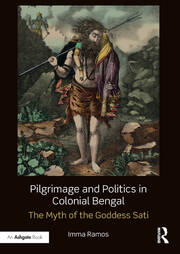
Pilgrimage and Politics in Colonial Bengal The Myth of the Goddess Sati
Contents
Introduction
A myth of dismemberment
Sati and her rise as a patriotic icon
The formation of Hindu identity: From cultural to revolutionary nationalism
Layout of the book
Chapter One
Kalighat souvenirs and the creation of Sati’s iconography
Sati’s place in the visual rhetoric of motherland
Sati’s portrayal in Kalighat pilgrimage souvenirs
The invocation and reinvention of Sati
The romanticisation of martyrdom
Subverting Christian iconography
Shiva, asceticism and Bengali masculinity
Sati, suttee and the story of Padmini
The enduring power of Sati
Chapter Two
Kamakhya’s erotic-apotropaic potency and the forging of sacred geography
Martial and maternal: Kamakhya’s sculptures
The promotion of fertility and protection: Kamakhya’s female archers
Subversive sexuality: The reception of Kamakhya during the colonial period
Colonial mapping versus sacred geography
Bengal’s love affair with Kamakhya: Pilgrimage as a nationalist device
Chapter Three
Tantra’s revolutionary potential: Tarapith and Bamakhepa’s visualisation of Tara
Understanding Tara
Understanding Tantric ritual through Tara
Bamakhepa, Tantra and revolutionary potential
Terrifying and benevolent: Visions of Tara
The sweetening of death
Chapter Four
Contesting the colonial gaze: Image worship debates in nineteenth-century Bengal
Murtipuja, darshan and rituals of consecration
Ram Mohan Roy and the Brahmo Samaj movement
‘Inconsistent with the moral order of the universe’: The Reverend Hastie’s views on murtipuja
The backlash: Bengali responses to Hastie
The Saligram idol case: Murti and artefact
The Attahas and Khirogram Pithas: The charisma of antique murtis
Conclusion
Epilogue
Reviving Sati’s corpse: Mother India tours and Hindutva in the twenty-first century
Bibliography
Biography
Imma Ramos is curator of the South Asia collections at the British Museum in London. Her research interests revolve around the relationship between religion, politics and gender in South Asian visual culture.
