





1st Edition
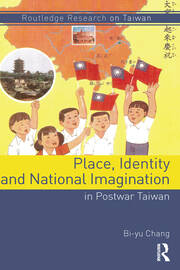
Place, Identity, and National Imagination in Post-war Taiwan
1. Introduction: Homeland Building: Nationalism, Identity, and Geographical Imagination in post-war Taiwan 2. Building Castle in the Sand: The Construction of National Imagination and Territorial Ownership in the ROC Yearbooks (1951-2010) 3. Maps, Modernity, and the State: Taiwan’s Post-war Cartographic Development and Changing National Rhetoric 4. The Rise and Fall of Sanminzhuyi Utopia: The Spatiality of Power in the Construction and Dismantling of Chunghsing New Village 5. Home is a Foreign Country: The ‘National Geography’ in Post-war Elementary Education (1945-2000) 6. Postscript: Home and Beyond
Biography
Bi-yu Chang is Deputy Director of the Centre of Taiwan Studies at the School of Oriental and African Studies, University of London, UK.
"Chang Bi-yu...the rich empirical data she has provided in each of her four case studies is thoughtfully analyzed, resulting in a broad-ranging picture of the KMT’s attempts to employ cartographic representations, yearbook spatial discourse, elementary-school geography textbooks, and urban planning to solidify domestic support for its rule in Taiwan and to legitimate its claims over the “innate national territory” of Free China. One can only hope that this fine research will stimulate even greater interest in the history of cartography, spatial discourse, and urban planning in postwar Taiwan."
Douglas Fix, professor of History and Humanities at Reed College.
Cross-currents: East Asian History and Culture Review, Review Essay
