





178 Pages
by
Routledge
184 Pages
by
Routledge
184 Pages
by
Routledge
Also available as eBook on:
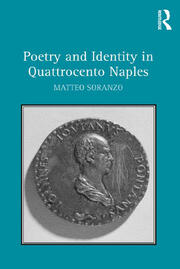
Poetry and Identity in Quattrocento Naples approaches poems as acts of cultural identity and investigates how a group of authors used poetry to develop a poetic style, while also displaying their position toward the culture of others. Starting from an analysis of Giovanni Pontano’s Parthenopeus and De amore coniugali, followed by a discussion of Jacopo Sannazaro’s Arcadia, Matteo Soranzo links the... Read more
Introduction; Chapter 1 Latin at the Castle; Chapter 2 Poetry and Patria; Chapter 3 Elegies for a Bride; Chapter 4 Pastoral Affiliations; Chapter 5 Written in the Stars; Chapter 6 The Cloud-Shrouded Tower; conclusion Conclusion;
Biography
Matteo Soranzo is Professor of Italian in the Department of Languages, Literatures and Cultures at McGill University, Canada.
'There is a veritable Pontano industry in current scholarship, such that it is difficult to say something really new about this author and the literary culture of Renaissance Naples. Soranzo has succeeded in doing so, within a methodological framework that will provoke thought for the readers of SHARP News, no matter what their field of specialization.' SHARP News 'Matteo Soranzo’s book provides an original and welcome take on a series of texts from a specific period, the cultural world of Aragonese Naples. ... the book is a must read, as much for scholars of Neapolitan history as for those interested in neo-Latin literature and Italian studies.' Renaissance and Reformation 'The great merit of this book is to bring together scholarly writing that will reach a wider audience of enlightened amateurs, by contextualizing Neapolitan humanism within cultural studies of early modern Europe.' Renaissance Quarterly 'Frequently neglected in studies of fifteenth- and sixteenth-century Italian poetry, the social and political status and associations of writers, and the material diffusion of their works, provide the context from which Matteo Soranzo investigates poetry in Aragonese Naples.' Parergon
