




1st Edition
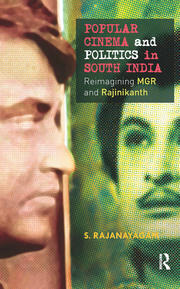
Popular Cinema and Politics in South India The Films of MGR and Rajinikanth
Introduction: Popular as Political. Part 1: Politics of Narrative. 1. Assemblage Structure 2. Image-Building Devices Part 2: Politics of Body 3. Imaging Male Body 4. On Being a Man’s Woman 5. Psycho-Cultural Mapping of Body 6. Double Bodied Migrantcy 7. Wealth of Poverty 8. Dispensation of Justice Part 3: Politics of Imaging Politics 9. Image and Imagining 10. Politically-Loaded Octa-Motifs 11. Imaging by Tactexting 12. MGR: Politics as Co-text 13. RK: Politics as Context 14. Cinelating Politiking 15. Politics beyond Politics: Trans-Image Voting. Select Bibliography.
Biography
S. Rajanayagam is Director, People Studies, Chennai; and Associate Professor, Department of Visual Communication, Loyola College, Chennai.
The cinema–politics nexus is a powerful narrative that animates the political and cultural landscape of the Indian state of Tamil Nadu. In this thoughtprovoking book, Rajanayagam deconstructs this natural symbiosis . . . to reveal a more complex and rich reading of the transition from the screen to politics.
— Selvaraj Velayutham, Macquarie University
Rajanayagam provides a penetrating and unprecedented insight into the political commentary of two of India's leading film stars. A must read for anyone interested in their work, or the connection between film and politics.
— Richard C. Reuben, University of Missouri School of Law
