




1st Edition
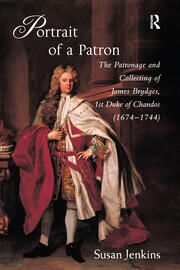
Portrait of a Patron The Patronage and Collecting of James Brydges, 1st Duke of Chandos (1674–1744)
By Susan Jenkins
Copyright 2007
232 Pages
by
Routledge
232 Pages
by
Routledge
Also available as eBook on:
Once described as 'England's Apollo' James Brydges, first Duke of Chandos (1674-1744) was an outstanding patron of the arts during the first half of the eighteenth century. Having acquired great wealth and influence as Paymaster-General of Queen Anne's forces abroad, Chandos commissioned work from leading artists, architects, poets and composers including Godfrey Kneller, William Talman, Sir John... Read more
Contents: Introduction; Curriculum vitae: ambitions, achievements, politics; Architectural patronage: the building of Cannons; Cannons: the interior decoration; The grounds of Cannons; After the crash: architectural and other projects; Collecting in context: collectors and collections; The Duke of Chandos as a collector; The Duke as 'Apollo of the Arts'; Death and disposal; Appendices; Select bibliography; Index.
Biography
Dr Susan Jenkins was awarded a history scholarship to Gonville & Caius College, Cambridge, followed by an MA in Art History with Distinction, from the Courtauld Institute, London. She has worked as a curator at the V&A, Historic Royal Palaces and the J. Paul Getty Museum and has published on the history of taste and collecting.
'The marvels of Chandos's lost palace and scattered collections live again in this book. A fascinating portrait of an extravagant, contradictory figure and his times.' Simon Bradley, Editor, Pevsner Architectural Guides 'Susan Jenkins's brilliant and scholarly account of this parvenu prince of patrons sheds new light on almost every aspect of the extraordinarily rich culture of Augustan England.' Desmond Shawe-Taylor, Surveyor of the Queen's Pictures ’This is a book for those who are interested in the phenomenon of collecting, whether enthusiast or student. It is full of detailed information and extensive footnotes and appendices, with a select bibliography and an index. Jenkins has not only presented the facts but sifts and judges in a very readable way. The background information is a fascinating as the main story.’ The Art Book ’With use of an extensive range of unpublished sources, this wide-ranging work re-establishes the merit and importance of a great patron... it is greatly to be welcomed as a major work of scholarship on a little-studied topic of considerable significance in the history of British taste.’ Journal of the History of Collections
