




1st Edition
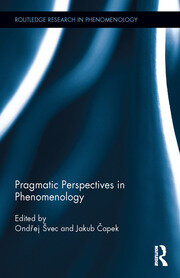
Pragmatic Perspectives in Phenomenology
Introduction: Localizing the Pragmatic Turn in Phenomenology
Ondřej Švec and Jakub Čapek
Part I: Contemporary Pragmatic Readings of Phenomenology
1. On Layer Cakes: Heidegger’s Normative Pragmatism Revisited
Mark Okrent
2. Heidegger’s Pragmatist Readers
Thomas Nenon
3. Primordiality and the Pragmata. A Critical Assessment of Rorty’s Challenge to Heideggerian Nostalgia
Andreas Beinsteiner
4. Two Forms of Practical Knowledge in Being and Time
Tucker McKinney
5. Discursive Intentionality as Embodied Coping. A Pragmatist Critique of Existential Phenomenology
Carl B. Sachs
Part II: Pragmatic Readings Challenged by the History of the Phenomenology
6. The Limits of Dreyfus’ View of Husserl: Intentionality, Openness, and praxis
Witold Płotka
7. On Dreyfus’ Naturalization of Phenomenological Pragmatism: Misleading Dichotomies, and the Counter-Concept of Intentionality
Sophie Loidolt
8. Perceptual Faith beyond Practical Involvement: Merleau-Ponty and His Pragmatist Readers
Jakub Čapek
9. Max Scheler and Pragmatism
Zachary Davis
10. From Circumspection to Insight
Eddo Evink
Part III: Opening up Perspectives
11. Freedom and The Theoretical Attitude
James Mensch
12. The Primacy of Practice and the Pervasiveness of Discourse
Ondřej Švec
13. Making Sense of Human Existence (Heidegger on the Limits of Practical Familiarity)
Mark Wrathall
14. Exemplary Necessity: Heidegger, Pragmatism, and Reason
Steven Crowell
Biography
Ondřej Švec is Assistant Professor of Philosophy at Charles University in Prague, Czech Republic. His publications include a book about phenomenology of emotions and various articles on lifeworld, historical conditions of objectivity, overcoming subjectivism in phenomenology and French historical epistemology.
Jakub Čapek is Associate Professor of Philosophy at Charles University in Prague, Czech Republic. His areas of specialization cover twentieth-century German and French philosophy, especially phenomenology and hermeneutics, philosophy of action, philosophy of perception and questions of personal identity.
"There are some excellent papers here that not only articulate the pragmatic turn in the history of phenomenology, but offer much-needed insight into the problems associated with long-standing pragmatic interpretations of the works of Heidegger, Merleau-Ponty and Husserl." – Phenomenological Reviews
"The debate over the pragmatic turn in phenomenology is of the utmost significance since it will determine the future of the movement, and in this volume prominent philosophers examine the key positions and arguments that have been developing over at least a decade." – Michael D. Barber, St. Louis University, USA
