




1st Edition
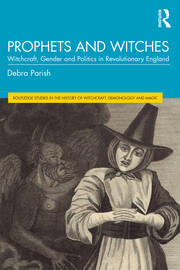
Prophets and Witches Witchcraft, Gender and Politics in Revolutionary England
Contents
List of Figures
Acknowledgements
Introduction
Chapter One: ‘There Is No Self in this Thing’: The Power of Female Prophecy
Chapter Two: The Prophet and the Witch: Slippery Categories
Chapter Three: ‘Believe Not Every Spirit’: The Witch as the False Prophet
Chapter Four: ‘I Will Make Thee an Instrument’: The Visionary Performance
Chapter Five: ‘The Devil Is Broke Loose’: God’s Instruments/Satan’s Instruments
Chapter Six: ‘Quaking Witches’: Quakerism and Witchcraft
Chapter Seven: ‘Rebel Witches’: Witchcraft and Rebellion and Politics
Conclusion
Index
Biography
Debra Parish is a post-doctoral honorary research fellow in the School of Historical and Philosophical Inquiry at the University of Queensland. Her research interests are early modern women’s religiosity, prophecy and witchcraft. Her publications include a book chapter titled ‘Anna Trapnel: Prophet or Witch’ in Women on the Edge in Early Modern Europe (2019) and journal articles including ‘The Power of Female Piety’ (1992) and most recently ‘Civility, Gender and Women’s Preaching’ (2024).
'In this welcome and nuanced study, Debra Parish maps out the murky borderlands between female prophecy, demonic possession and witch beliefs in revolutionary England, with a keen eye on the religious politics of the age. The result is a reminder that the concept of witchcraft – and indeed divine authority – was bound into the larger debates of this turbulent period.'
Darren Oldridge, University of Worcester, UK
'This makes a significant contribution to our knowledge of the period of the English Revolution, by teasing out the relationship between attitudes to religion, magic and gender, as they operated in a cross-fire over the appearance of radical prophetesses.'
Ronald Hutton, University of Bristol, UK
