





1st Edition
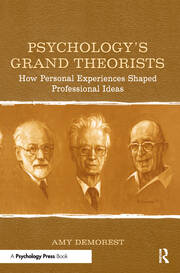
Psychology's Grand Theorists How Personal Experiences Shaped Professional Ideas
Biography
Amy P. Demorest
"Amy Demorest has written an elegant and insightful book about how the personal lives of psychology's most well-known theorists deeply influenced the theories they produced. Her careful reading of autobiographical sources and her innovative analysis set new standards for scholarship in the study of eminent lives. This beautifully written book is a must-read for anybody interested in the nature and origins of personality theory, the history of psychology, or the psychological study of the individual person."—Dan P. McAdams, Ph.D. Northwestern University
"Amy Demorest has put the person back at the center of personality theory....she shows how the individual psychologies and personal preoccupations of three giants in the field are reflected in their respective theories. Her accessible and fascinating study will be valued by undergraduate and graduate students, academic psychologists, psychotherapists, and others interested in the origins of seminal ideas."—Nancy McWilliams, Ph.D. Rutgers, The State University of New Jersey
"This book is a winner....Professor Demorest tells compelling stories which draw readers in....She writes about the most influential thinkers in the field of psychology.... in a way that brings them to life... and she presents a model that can be applied to every major theorist, as well as every other person we meet in life."—Richard P. Halgin, Ph.D. University of Massachusetts, Amherst
