





1st Edition
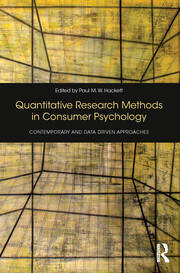
Quantitative Research Methods in Consumer Psychology Contemporary and Data Driven Approaches
Preface Paul M. W. Hackett
1. Quantitative Research: Its Place in Consumer Psychology Cathrine Jansson-Boyd
2. Using Contemporary Quantitative Techniques Or Shkoler
3. Measurement Theory and Psychological Scaling Daniel P. Hinton and Tracey Platt
4. Identify, Interpret, Monitor and Respond to Quantitative Consumer Data on Social Media Amy Jauman
5. Alternative Research Methods: Introducing Market Sensing—A Qualitative and Interpretive Perspective on Research David Longbottom and Alison Lawson
6. Big Data: Data Visualization and Quantitative Research Apps Vaidas Lukošius and Michael R. Hyman
7. Exploring Ways of Extracting Insights from Big Data Peter Steidl
8. Contemporary Approaches to Modeling the Consumer Debbie Isobel Keeling
9. Connectionist Modelling of Consumer Choice Max Greene, Peter Morgan, and Gordon Foxall
10. Uniting Theory and Empirical Research: Market Research and Marketing Sensing Melvin Prince, Constantinos-Vasilios Priporas, Gillie Gabay, and Howard Moskowitz
11. Ethical Issues in Conducting Psychological Research David B. Resnik
12. A User-Friendly Practical Guide to Preparing Data for Analysis Kerry Rees
13. Integrating and Writing Up Data Driven Quantitative Research: From Design to Result Presentation Paul M. W. Hackett, Lydia Lu and Paul M. Capobianco
Biography
Paul M. W. Hackett's main area of research is in the theory and application of categorical
ontologies. Paul has developed the qualitative or philosophical facet theory
approach. He has almost 200 publications, including 10 books. Paul is a visiting
professor of at the Universities of Suffolk and Gloucestershire, a visiting researcher
in psychology at Cambridge University and teaches at Emerson College.
.
"Quantitative Research Methods in Consumer Psychology" is an essential book for those interested in understanding current, effective, and most of all relevant methods for quantitative consumer research. The examples used are clear and detailed, and they give the reader, of any level, a better understanding of how to improve his or her research methods.
–Valdimar Sigurðsson, Reykjavik University, Iceland
