




1st Edition
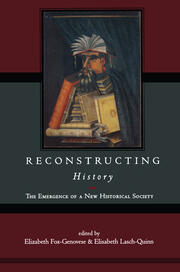
Reconstructing History
Pa r t I T h e I m p e r a t i v e : T h e H i s t o r i c a l S o c i e t y a s a C r i t i q u e a n d a N e w I d e a l, P a r t II H i s t o r y a n d the C o n t e m p o r a r y I n t e l l e c t u a l M i l i e u, P a r t I I I M e d i t a t i o n s o n t h e P r a c t i c e o f H i s t o r y, P a r t IV A n E d u c a t i o n a l M i s s i o n : S t a n d a r d s f o r t h e T e a c h i n g of H i s t o r y, P a r t V H i s t o r i a n s at W o r k .
Biography
Emory University and a member of the executive board of the Historical Society. Elisabeth Lasch-Quinn is Associate Professor of History at Syracuse University.
"An important collection for anyone concerned about history and its place in the so-called "culture wars"." -- Religious Studies Review
"Rarely have so many distinguished American historians been collected between the covers of one relatively small book...eloquent...given the intellectual firepower of [Reconstructing History], [readers] are likely to wonder if the postmodernists have more than met their match." -- Washington Times
"Some historians on the right, on the left, and in between agree that something's been missing in the learned societies that represent their discipline. Now a new group aims to fill the gap." -- The Chronicle of Higher Education
"In short, this is a book every historian who aspires to any degree of objectivity should read. The Historical Society has shown that it can match its rhetoric with scholarship. When the organization was founded, John H. Roper of Emory University said,We simply must restore the dignity of our profession. This book has taken an important step in that direction."
"An important collection for anyone concerned about history and its place in the so-called "culture wars." -- Religious Studies Review, July 2001
