





1st Edition
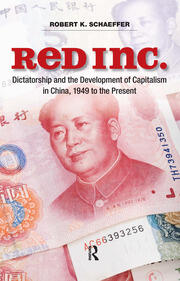
Red Inc. Dictatorship and the Development of Capitalism in China, 1949-2009
By Robert K. Schaeffer
Copyright 2011
272 Pages
by
Routledge
272 Pages
by
Routledge
272 Pages
by
Routledge
Also available as eBook on:
Red Inc. takes issue with the view that economic development will eventually promote democracy. It outlines in detail the enormous social costs of the rapid rise of China's economy. Although many observers argue that Deng Xiaoping introduced capitalism to China in the late 1970s, Schaeffer believes that capitalist development really began during the 1950s under Mao Zedong. But although Mao made... Read more
Chapter 1 Agrarian Reform and the Consolidation of Power; Chapter 2 The Collectivization of Agriculture and the Great Leap Forward; Chapter 3 The Cultural Revolution; Chapter 4 A Crisis of Succession; Chapter 5 The Reforms; Chapter 6 Dictatorship, Democracy, and Tiananmen Square; Chapter 7 Economic Crises in Democratizing States and the Foreign Investment Flood in China; Chapter 8 US Accommodation and the China Market; Chapter 9 Democracy Deterred; conclusion Conclusion;
Biography
Authored by Schaeffer, Robert K.
“I grew up thinking of China as an archetypical Communist country—a country that unlike the Soviet Union didn’t take the ‘capitalist road.’ In a brilliant new book, Robert Schaeffer reconceptualizes the history of modern China and of China’s economic development since the revolution. To Schaeffer, China was always capitalist, but of a kind that disguised, and was meant to justify, the brutal process of capital accumulation necessary to create an industrial China. What distinguished ‘Communist’ China’s first thirty years from its last was that recently, it has succeeded, and has built a major capitalist economy. Yet, as Schaeffer shows, its success has been at the expense of its own citizenry, and to some extent that of other countries. I highly recommend this book.”
—John B. Judis, Senior Editor, The New Republic, and author of The Folly of Empire
