




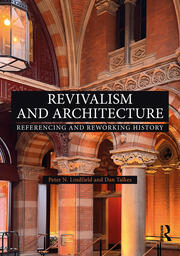
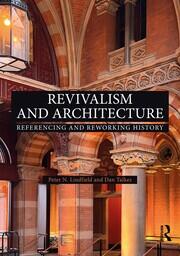
1st Edition
Revivalism and Architecture Referencing and Reworking History
Historia Rediviva: Architectural Afterlives
Peter N. Lindfield
Introduction to The Essays
Dan Talkes
SECTION 1: Coded, Surprising Revivals
1.1 Contemporary Revivalism
Timothy Brittain-Catlin
1.2. Guises of the Picturesque: Revivifying the British Surface
Stephen Kite
SECTION 2: Challenging Revivalism and Ancient History
2.1. Prototype of Earnest Revivalism: Old Somerset House, London, and the Establishment, or Notion, of a National Style
Manolo Guerci
2.2. Sandown Castle’s Revivalism Hidden in Plain Sight: A Tale of Spolia
Christopher Moore
SECTION 3: Us and ‘The Other’
3.1. Mapping Revivals, Defining Style: The Alhambresque in The Long Nineteenth Century
Lieske Huits
3.2. Fiske Kimball and the Politics of the Colonial Revival
Jean-François Bédard
SECTION 4: Gothics
4.1. James Wyatt’s Westminster: A Turning Point in the Gothic Revival?
Murray Tremellen
4.2. Replication vs Evolution: The ‘Tudor Revival’ Buildings of Blunden Shadbolt and Ernest Trobridge
Tim Horne
SECTION 5: Decorative Arts
5.1. The Medievalisms of Victorian Stained Glass
Martin Crampin
5.2. Graphic Imagination: Reviving the ‘Ripon School’ Style
Peter N. Lindfield
Biography
Peter N. Lindfield is Senior Lecturer in Architectural History at the Welsh School of Architecture, Cardiff University, and a Fellow of the Society of Antiquaries of London. He has written extensively on the Gothic Revival, heraldry, forgery, and material culture, including the following monographs: Georgian Gothic (2016); Unbuilt Strawberry Hill (2022); and The Intimacies of George Shaw (2025). Additionally, Peter edited or co‑edited volumes including Writing Britain’s Ruins (2017); The Display of Arms (2019); Politics and the English Country House (2023); and The Marriage Bed of Henry VII and Elizabeth of York (2023).
Dan Talkes is Lecturer in Design and Construction at the Welsh School of Architecture, Cardiff University. A recipient of the Welsh Gold Medal for Architecture, and an Accredited Conservation Architect (AABC), he is both an educator and practitioner, with a specialism in new architecture in historic contexts. Accordingly, questions of style appropriation and appropriateness infuse and inform both his practice and research, most particularly in his long‑standing role as Heritage Consultant, Conservation Architect and Design Advisor to the medieval and neo‑medieval St Mary Redcliffe, Bristol.
