




1st Edition
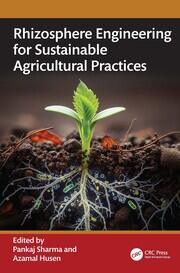
Rhizosphere Engineering for Sustainable Agricultural Practices
Preface
About the Editors
List of Contributors
Chapter 1 Rhizosphere and Its Microbiome: Harnessing Its Agricultural Propensity for Sustainable Plant Growth Promotion
Shibashankar Panda, Venkadasamy Govindasamy, Wakambam Elision, Dolmani Amat, and Rajeev Kaushik
Chapter 2 Rhizosphere Engineering for Abiotic Stress Tolerance in Plants
Kesavardhini Kumaresan, Saranraj Pazhani, Abdel Razzaq Mohammad Al‑Tawaha, Dayana Srinivasan, Gayathri Karthikeyan, Vijayalakshmi Ramdass, and Lokeshwari Balachander
Chapter 3 Rhizosphere Engineering for Enhancing Nitrogen Mobilization in Plants
Manigandan Murugan, Gayathri Karthikeyan, Manikandan Kathirvel, Arthi Kumar, Gothandan Samudi, and Glaucio Dire Feliciano
Chapter 4 Rhizosphere Engineering for Improving Phosphate Mobilization in Plants
Dania Ajmal, Noor E. Sahar, Mamoona Munir, Sadia Abdullah, Mushtaq Ahmad, Samreen Dawood, and Maria Ameen
Chapter 5 Rhizosphere Engineering for Zinc Mobilization in Plants
Nidhi Prajapati, Arati Chaudhary, Dharmendra Prajapati, and Anil Patani
Chapter 6 Rhizosphere Engineering for the Degradation of Recalcitrant Xenobiotic Contaminants from Agricultural Soils
Subhalakshmi Udayakumar, Saranraj Pazhani, Lokeshwari Balachander, Alexander Machado Cardoso, Rafi Syed Roohina Tabassum, and Monisha Selvam
Chapter 7 Microbial Endophytes: An Important Tool for Engineering Rhizosphere Microbiome
Saranraj Pazhani, Gayathri Karthikeyan, Riyaz Sayyed, Kishore Venkatesan, Sumaiya Taslim Nazir Basha, Mubarak Ali Askar Ali, and Mohanasri Anandhan
Chapter 8 Biofertilizers An Important Tool to Increase Plant Production via Engineering Its Rhizospheric Microbiome
Shweta Sharma, Anuja, Sukhchain, Varsha Malik, Pushp Lata, Nibha Singh, and Dilbag Singh
Chapter 9 Earthworm‑Mediated Rhizosphere Engineering: Biological and Biochemical Mechanisms
Shweta Sharma, Varsha Malik, Nibha Singh, Kiran Kiran, Deepak Khatkar, and Dilbag Singh
Chapter 10 Actinobacteria: An Important Tool for Engineering Rhizosphere Microbiome
Shibashankar Panda, Wakambam Elision, Venkadasamy Govindasamy, Dolmani Amat, and Rajeev Kaushik
Chapter 11 Rhizospheric Actinomycetes for Plant Disease Management and Stress Tolerance
Shayista Herial, Syed Baker, Niranjan Raj Sathyanarayana, Lakshmi Sira, and Nagendra Prasad Nagalingaswamy
Chapter 12 Cyanobacteria: An Important Tool for Engineering Rhizosphere Microbiome
Manigandan Murugan, Fareedhul Fahmitha Fausul Hugh, Sandhiya Arul, Anbazagan Shanmugam, Glaucio Dire Feliciano, and Vithiya Govindaraji
Chapter 13 Rhizosphere Engineering for the Management of Bacterial Pathogens
Nisha Rajasekaran, Divya Manimaran, Sabina Banu Abdhul Fairose, Vilmasen Parnandhu, Gayathri Karthikeyan, Turana Mammadova, and Yuvalakshmi Logesan
Chapter 14 Rhizosphere Engineering for Sustainable Management of Phytopathogenic Fungi
Shibashankar Panda, Wakambam Elision, Venkadasamy Govindasamy, Dolmani Amat, and Rajeev Kaushik
Chapter 15 Rhizosphere Engineering for Conditioning Systemic Acquired Resistance and Induced Systemic Resistance in Plants
Kiran Kiran, Neeraj Kumar, Sudeep Sindhu, Sujata Yadav, Shweta Sharma, and Dilbag Singh
Chapter 16 Biotechnological and Genetic Engineering: The Future Weapon for Engineering Rhizosphere Microbiome
Md. Yeakub Khan, Sabrina Parvin Mita, and Akbar Hossain
Chapter 17 Current Agricultural Practices Delinking the Plant–Microbe Interaction and Degrading Rhizosphere Microbiome
Sadia Abdullah, Mamoona Munir, Wasim Akhtar, Mushtaq Ahmad, and Shazia Sultana
Chapter 18 Microbial Engineering of the Rhizosphere: Enhancing Plant Health and Soil Interactions in Brassica juncea
Kiran Kiran, Rameshwar Singh, Rahul Kumar, and Sudeep Sindhu
Index
Biography
Dr. Pankaj Sharma is an accomplished researcher and academic with interdisciplinary expertise spanning rhizosphere microbiology, plant–microbe interactions, nanomaterials, and sustainable agriculture, alongside advanced training in molecular biology and host–pathogen interactions. He is currently a senior postdoctoral researcher at the University of Illinois Chicago (UIC), USA. His research career reflects strong international exposure and cross-disciplinary integration, bridging agricultural microbiology with cutting-edge cellular and molecular approaches. Dr. Sharma’s scientific contributions focus on understanding microbial interactions at biological interfaces, including the rhizosphere and phyllosphere, and their implications for plant health, nutrient cycling, and stress resilience. He has been actively involved in research addressing sustainable agricultural practices, beneficial microbial communities, and the application of nanomaterials and nanocomposites to enhance soil fertility, microbial function, and crop productivity. His work emphasizes environmentally responsible strategies for improving plant growth and resilience through rhizosphere engineering. In addition to his agricultural research, Dr. Sharma has extensive expertise in molecular and cellular biology, including host–microbe interactions, mitochondrial quality control, autophagy, and innate immune signaling. This broad scientific foundation enables him to bring mechanistic rigor and translational perspectives to interdisciplinary research themes. He has authored and co-authored multiple peer-reviewed research articles and book chapters published by reputed international publishers, with several contributions focusing on nanomaterials, rhizosphere processes, and plant–soil–microbe interactions. Dr. Sharma is actively engaged in academic service and scientific publishing, contributing as a reviewer for international journals and edited volumes. He has collaborated with researchers across diverse disciplines and institutions, reflecting a strong commitment to global and interdisciplinary science. His experience also includes mentoring junior researchers and contributing to scholarly activities that promote sustainable and innovative agricultural solutions. Through his research, editorial contributions, and interdisciplinary outlook, Dr. Sharma continues to advance the field of sustainable agriculture, with the goal of developing sustainable, science-driven strategies for agriculture that integrate microbial ecology, nanotechnology, and environmental stewardship.
Professor Azamal Husen is an eminent academic and researcher whose career spans over two decades of outstanding contributions to teaching, research, and scientific leadership. His academic journey has been marked by distinction and international engagement, having served as Full Professor and Head of the Department of Biology at the University of Gondar, Ethiopia, and Foreign Delegate at Wolaita Sodo University, Ethiopia. In India, he is currently an Adjunct Professor at Graphic Era University, and has previously served as Professor at Sankalchand Patel University and Visiting Faculty at several reputed Indian institutions, including the Forest Research Institute, Dehradun. His research has been supported by several prestigious national and international organizations, such as the World Bank, National Agricultural Technology Project, Indian Council of Agricultural Research, Indian Council of Forestry Research and Education, and the Japan Bank for International Cooperation. A prolific scholar, Prof. Husen has authored a vast number of research papers, books, and book chapters published by leading international publishers. His commitment to advancing global science is reflected in his editorial and peer review work for numerous high-impact international journals. His expertise has been widely acknowledged through invitations to evaluate book proposals for leading global publishers such as Springer, Taylor & Francis, and Elsevier, as well as to review research projects for prestigious international funding agencies, including the Czech Science Foundation (Czechia) and the National Research, Development and Innovation Office (Hungary). He is a Fellow of the Plantae Group under the American Society of Plant Biologists, and a member of several prestigious scientific organizations, including the International Society of Root Research, the Asian Council of Science Editors, and the International Natural Product Sciences Taskforce. Throughout his distinguished career, Prof. Husen has been a keynote and invited speaker at numerous international conferences and symposia. He has played a significant role in academic development, contributing to curriculum design, faculty training, and educational module development across undergraduate, postgraduate, and doctoral programs. His outstanding achievements in teaching, research, and community service earned him special recognition from the University of Gondar. In the realm of scientific publishing, he serves as Editor-in-Chief of the American Journal of Plant Physiology and as Series Editor for several globally recognized academic collections, including Exploring Medicinal Plants, Plant Chemistry, Plant Biology, Sustainability, and Climate Change, Smart Nanomaterials Technology, and the Handbook Series on Nanotechnology and Its Applications. Consistently recognized among the World’s Top 2% Scientists (2020 onwards) by Stanford University, Prof. Husen has also served as Guest Editor for several influential special issues, including Advances in Plant Metabolomics (Plant Physiology and Biochemistry), Exploring Nanotechnology in Medicinal Plants (Journal of Herbal Medicine), and Integrating Nanotechnology with Plant Compounds (Frontiers in Plant Science). Through his scholarly excellence, editorial leadership, and global collaborations, Prof. Husen continues to advance cutting-edge research at the intersection of plant science, nanotechnology, and sustainability, establishing himself as a leading figure in contemporary biological and environmental research.
