





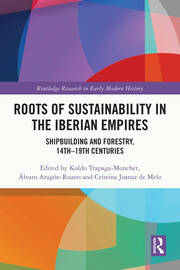
1st Edition
Roots of Sustainability in the Iberian Empires Shipbuilding and Forestry, 14th - 19th Centuries
Introduction: The Game of the Demiurge in the Garden of Chronos: woods play hide-and-seek in the long run through sustainable management
Koldo Trapaga-Monchet, Álvaro Aragón-Ruano, Cristina Joanaz de Melo
1. The global timber trade and shipbuilding in the 16th-18th centuries: interdisciplinarity, research problems and the ForSEAdiscovery project
Ana Crespo Solana
2. Durable Forests in a Tensile State: Intensive and Extensive Approaches to Naval Forestry in Early Modern Spain
John T. Wing
3. Empirical silviculture and sustainability in the Basque Country during the Early Modern Period
Álvaro Aragón-Ruano
4. The sustainability of forests for shipbuilding. A historical-archaeological view of Biscayan shipbuilding and its forestry tradition in the 16th-17th centuries
Beñat Eguiluz-Miranda
5. The beginnings of the preservation and development of Spanish forestry for naval construction: the legal and silvicultural enquiries conducted by the Royal Council of Castile in Guipúzcoa (1569)
Alfredo José Martínez-González
6. "In All this Kingdom there Is No Timber". Wood for the king’s galleys: exploitation and conservation of the Catalan forests in the age of Lepanto
A. Jorge Aguilera-López
7. A destruction that preserves: maritime warfare, empirical forestry and sustainability in Portugal (13-17th centuries)
Koldo Trapaga-Monchet
8. Sustainability assessment of forest resources in the geographical area of application of the 1546 Cork Oak Law
Raúl Romero-Calcerrada and Koldo Trapaga-Monchet
9. Logistics, sustainability and river transport of wood supplies from the Navarrese Pyrenees for the Royal Navy at the end of the 18th century
Óscar Riezu-Elizalde
10. Forests in Portugal, 1750s-1820s: A History of Forests Compensation
Cristina Joanaz de Melo
Biography
Koldo Trapaga Monchet is currently an Associate Professor of Early Modern History at King Juan Carlos University. His two main research lines revolve around the politics and governance of the royal forests and woodlands in the Iberian Peninsula from the 15th to the 17th centuries, especially in regard to shipbuilding, and the study of the political performance and the royal households of Don Juan José de Austria in the Hispanic Monarchy.
Alvaro Aragón Ruano took his degree in History at the University of Deusto (1992) and later moved to the University of the Basque Country, where he is currently acting as Aggregate Professor, obtaining his PhD by means of research into woodland in Guipúzcoa during the Early Modern era. Since then, he has spent over 20 years analyzing different aspects of Basque forest history. Nowadays he is focused on Basque-Navarrese woodlands’ historical management and sustainability during the Medieval and Early Modern eras.
Cristina Joanaz de Melo is Integrated Researcher at Universidade NOVA de Lisboa (IHC-Lab:in2past) and Invited Professor at Universidade Autónoma de Lisboa, teaching a course on "Environmental History". She is founding member of the Portuguese Network of Environmental History (REPORTHA 2015). Her PhD, on Hydrological and Forestry Policies in Portugal (and Southern Europe), 1830s to 1880s, was taken at the European University Institute (Florence, 2010). Working and publishing on natural resources, hunting and forests since the 1990s, her current interests lie in natural resource recovery, renewal and compensation due to human agency, from the 1400s to the 1800s, across the Iberian Peninsula and naval empires.
