




1st Edition
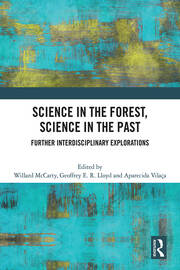
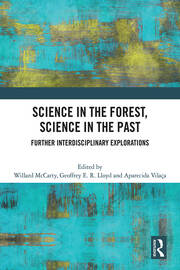
Science in the Forest, Science in the Past Further Interdisciplinary Explorations
Preface
Willard McCarty
1. Introduction
Geoffrey E. R. Lloyd
2. Philosophical engagements with distant sciences
Nicholas Jardine
3. Mongolian map- making as practice
Caroline Humphrey
4. Star canoes, voyaging worlds
Anne Salmond
5. Counting generation(s)
Marilyn Strathern
6. A pagan arithmetic: unstable sets in indigenous Amazonia
Aparecida Vilaça
7. As perceived, not as known: digital enquiry and the art of intelligence
Willard McCarty
8. Inventing Artificial Intelligence in Ethiopia
Alan F. Blackwell, Addisu Damena and Tesfa Tegegne
9. Mereological themes in cuneiform worldmaking
Francesca Rochberg
10. Monteverdi’s unruly women and their Amazonian sisters
Stephen Hugh-Jones
Biography
Willard McCarty works on relations among the interpretative human and computational sciences. He is Editor of Interdisciplinary Science Reviews and founding convenor of the online seminar for digital humanities, Humanist (1987– ). His current project is a study of what can be done with artificial intelligence to improve curiosity’s well- being.
Geoffrey E. R. Lloyd is based at the Needham Research Institute in Cambridge. The most recent of his many general cross-cultural studies of human cognitive experience is Intelligence and Intelligibility (2020).
Aparecida Vilaça is a social anthropologist from Museu Nacional, Universidade Federal do Rio de Janeiro. She has been working with the Wari’, an indigenous Amazonian people, for the last thirty years. Her main research themes are cannibalism, warfare, conversion to Christianity, schooling and mathematical knowledge.
