



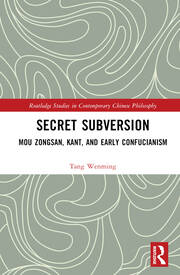

Volume 1 Part I: The Reduction of Morality 1. Autonomy and Altruism: On the Moralistic Interpretation of Confucian Thought 2. Do the Zhou People’s Concern-Consciousness and Respect for Virtue Constitute a Moral Breakthrough? 3. Is the Confucian Doctrine of Benevolence a Moralistic Doctrine? 4. Is Mencius’ Theory of Goodness of Human Nature a Moral Metaphysics? Part 2 The Appropriation of Autonomy 5. The Spirit of Confucian Ethics and Autonomous Morality 6. Mencius on the Internality of Benevolence and Righteousness 7. "The Internality of Benevolence and Righteousness" and Autonomous Morality 8. Confucian Ethics: Virtue-Based or Law-Based? Volume 2 Part I: The Arrogation of Conscience 1. Practical Reason at the Maximum and the Historical Development of Confucianism 2. Mind and Ontology 3. Intellectual Intuition and Thing-in-itself 4. Supreme Good and Perfection Religion Part II: The Graftage of History 5. Moral Metaphysics and Historical Philosophy under the Concern for the Chinese Problems 6. The Conception and Implication of Philosophy of History 7. Conscience, History and Perfection 8. The Third Period of Confucian Development and the Theory of Self-negation of Conscience
Biography
Tang Wenming is a professor in the Department of Philosophy and Deputy Director of the Institute for Ethics and Religions Studies at Tsinghua University, China. He is also Secretary General of the Chinese Confucian Academy. His research areas are ethics, Chinese philosophy, and religious studies.
