





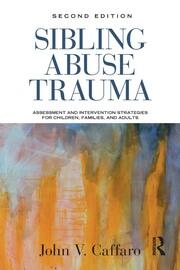
2nd Edition
Sibling Abuse Trauma Assessment and Intervention Strategies for Children, Families, and Adults
Part I: The Context of Sibling Development and Maltreatment. The Sibling Domain. The Science of Sibling Relationships. Abusive Sibling Relationships. Part II: Sibling Violence and Sexual Abuse Sibling Sexual Abuse. Sibling Violence. Part III: Clinical Practice Assessment of Sibling Abuse. Clinical Best Practices with Children and Families. Intervention Strategies with Children and Families. Psychotherapy with Adult Survivors. Policy and Prevention. Appendix A: About the Research Project. Appendix B: The Sibling Abuse Interview. Appendix C: The Sibling Family-of-Origin Cartoon. Appendices. Appendix D: Semistructured Questionnaire, Adult Sibling Abuse Survivor Interview Questions.
Biography
John V. Caffaro, PhD, currently serves as Distinguished Professor in the PsyD program at the California School of Professional Psychology–Los Angeles. He also holds an appointment as Assistant Clinical Professor in the Child Psychiatry Residency Training Program at the University of California, San Diego School of Medicine. He draws on more than 20 years of private practice experience working with trauma treatment and currently divides his time between psychotherapy, teaching, writing, and professional training.
"Sibling Abuse Trauma highlights the crucial role the sibling relationship plays in childhood development and an ongoing sense of family, security or otherwise in adulthood. It asserts that this relationship generally outlives other familial bonds and can form one of the most lasting intimate relationships through the life cycle."
-Caroline Adewole, Attachment Journal
