





1st Edition
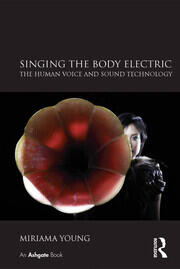
Singing the Body Electric: The Human Voice and Sound Technology
Biography
Miriama Young is a writer, sound artist and composer. Originally from New Zealand, she gained her PhD from Princeton (2007) on a Fulbright award. She writes music for film, dance, radio, live electronics and fixed media, voices and instruments. She is a Lecturer in Sonic Arts and Music Composition at the University of New South Wales, Sydney, Australia.
"Miriama Young has produced an excellent piece of work. The subject, the voice and recording technology and its use in music and musical contexts is relatively new, or is at least coincident with the advent of editable recording technology since the war. The non-linear approach that Miriama takes, partly narrative, partly anecdotal and partly historical, works particularly well with this subject. I also especially like the way she includes discussions of music from popular culture, blurring the boundaries between categories and genres."
- Paul Lansky, Princeton University, USA
"... it is definitely a monograph that invites the reader to come back to again and again, to discover and re-discover more voices, ideas, narratives, discussions, music, sounds, and valuable source materials. It is an amazing work which you do not have to agree with all the different voives in order to participate."
- Katerina Tzedaki, Technological Educational Institute of Crete
