




1st Edition
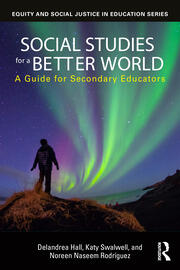
Social Studies for a Better World A Guide for Secondary Educators
Part 1: The Better World Secondary Social Studies Education Can Build 1. Defining A Better World in Social Studies 2. Developing Social Studies for a Better World Part 2: The Problematics in Social Studies 3. Normalization 4. Idealization 5. Heroification 6. Equalization 7. Dramatization & Gamification Part 3: Constructing Social Studies for a Better World 8. Navigating Roadblocks to Implementation 9. Planning for Social Studies that Builds a Better World 10. What’s Next? Building for the Future of Social Studies
Biography
Delandrea Hall (she/her) is an Assistant Professor of Social Studies Education in the Department of Teacher Education and Administration at the University of North Texas. She previously spent eleven years as a high school social studies teacher, primarily teaching Economics, in the Dallas area.
Katy Swalwell (she/her) is the founder of Past Present Future Consulting & Media, the co-founder of Past Present Future Publishing, and the co-host of the Our Dirty Laundry history podcast. Before developing social studies curriculum and facilitating professional development as a full-time consultant, Katy was a tenured professor of education and a secondary social studies classroom teacher.
Noreen Naseem Rodríguez (she/her) is an Associate Professor of Elementary Education and Educational Justice in the Department of Teacher Education and core faculty in the Asian Pacific American Studies and Muslim Studies Programs at Michigan State University. Before becoming a teacher educator, Noreen was a bilingual elementary teacher in Austin, Texas for nine years.
"This secondary edition of Social Studies for a Better World arrives at a critical moment. Amid widespread attacks on social studies and democracy itself, Hall, Swalwell, and Rodríguez offer us critical hope, and a vision of anti-oppressive social studies grounded in justice, liberation, and collective thriving. With clarity, wit, and conviction, they show how social studies classrooms can be spaces of humanization, collective care, and people power. Like its elementary counterpart, this volume offers powerful examples of anti-oppressive teaching in practice, affirming that this work is not only possible but already underway, and that our responsibility is to join the collective struggle."
—Leilani Sabzalian, Assistant Professor of Indigenous Studies in Education and author of Teaching Indigenous Studies: An Introduction for K-12 Educators
"At a time when honesty in education is under assault, Social Studies for a Better World supplies teachers with both clarity and courage. Hall, Swalwell, and Rodríguez refuse despair and instead offer a vision rooted in critical hope, care, interconnection, people power, and humanization—while also exposing the everyday ways social studies too often normalizes injustice through heroification, erasure, and curriculum violence. But this book doesn’t stop at critique. It equips educators with concrete tools to disrupt dominant narratives, center counter-narratives, and build classrooms grounded in truth and collective liberation. In the face of censorship and fear, it helps teachers transform the classroom into a site of freedom work—and reminds us that the marathon for justice continues in our schools. Social Studies for a Better World is a confrontation with injustice and a vision for a just society. This book belongs in every classroom library, teachers’ lounge, and educator’s bookshelf."
—Jesse Hagopian, Teacher and Director of Black Education Matters Award
"Social Studies for a Better World: A Guide for Secondary Educators could not be more timely! Between the ongoing neo-fascist attacks on the teaching of U.S. History, the growing disregard for constitutional democracy, and the extreme alienation young people feel today, we need tools like Social Studies for a Better World if we want to take the fight for justice seriously. All future and current secondary level social studies teachers need this book."
—Wayne Au, Dean and Professor, School of Educational Studies, University of Washington Bothell
