





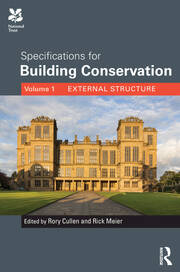
1st Edition
Specifications for Building Conservation Volume 1: External Structure
Preface, Introduction, Part I: Conservation, Philosophy and Principles, 1. Conservation Philosophy, 2. Conservation Principles of Heritage Organisations, 3. Conservation Plan, 4. Heritage Legislation, 5. Procurement and its Relationship with Specification, 6. Writing a Specification, Part II: Case Studies, 7. Building Recording, 8. Masonry: Brickwork and Stonework, 9. Timber Repairs, 10. Stone Roof Coverings, 11. Thatch
Biography
The National Trust was founded in 1895 with the aim of caring for special places, forever, for everyone. Now, over 120 years later, we look after historic houses and gardens, industrial monuments and mills, archaeological sites, nature reserves, coastlines, forests, and more. We have a portfolio of over 28,000 buildings and structures, across England, Wales and Northern Ireland. They include over 300 mansions, 57 entire villages, over 5000 cottages (some tenanted, some used as holiday cottages), farms, bridges, lighthouses and many others. We have built a formidable reputation for the conservation and care of places of natural beauty and historic significance. Even more importantly, we make sure that our places are available to all, with over 17 million visitors to pay-for-entry properties each year. We have 4.4 million members and 62,000 volunteers, who are vital to our work. We are a registered charity and are completely independent of Government, relying on membership fees, donations and legacies, and revenue raised from our commercial operations.
"This book will appeal to those starting in the business, looking to transfer from normal surveying to heritage work, to managers seeking an understanding of the process, and to conservation officers requiring guidance on what should be included in a specification. It will also serve as a general reference book for any surveyor working with historic buildings. In addition to its value as a technical handbook, the profits from sales go to support the National Trust building apprenticeship scheme. This helps to foster the transfer of knowledge and experience to the next generation, with hands-on experience and training within the direct-labour teams employed by the National Trust."
Janice Gooch, architectural historian and building surveyor, Context 154
