




1st Edition
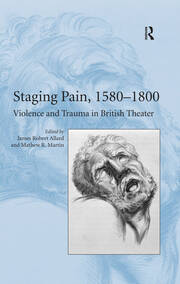
Staging Pain, 1580–1800 Violence and Trauma in British Theater
232 Pages
by
Routledge
232 Pages
by
Routledge
Also available as eBook on:
Bookending the chronology of this collection are two crucial moments in the histories of pain, trauma, and their staging in British theater: the establishment of secular and professional theater in London in the 1580s, and the growing dissatisfaction with theatrical modes of public punishment alongside the increasing efficacy of staging extravagant spectacles at the end of the eighteenth century.... Read more
Contents: Introduction: staging pain, Mathew R. Martin and James Robert Allard; Part I Traumatic Effects: 'This Tragic glass': tragedy and trauma in Tamburlaine Part 1, Mathew R. Martin; 'Uncollected man': trauma and the early modern mind-body in The Maid's Tragedy, Zackariah C. Long. Part II Pedagogies of Pain: 'These were spectacles to please my soul': inventive violence in the Renaissance revenge tragedy, Annalisa Castaldo; A 'bracing' moment: Reynolds' response to Boswell and Burke on the aesthetics and ethics of public executions, William Levine. Part III Bodies (Im)Politic: Radical pity responding to spectacles of violence in King Lear, John D. Staines; Cutting, branding, whipping, burning: the performance of judicial punishment in early modern England, Sarah Covington; Tortured bodies, factionalism and unsettled loyalties in Settle's Morocco plays, Susan B. Iwanisziw. Part IV Spectacular Failures: Lavinia's rape: reading the Restoration actress's body in pain in Ravenscroft's Titus, Kara Reilly; Sympathy pains: filicide and the spectacle of male heroic suffering on the 18th-century stage, Cecilia A. Feilla; Joanna Baillie and the theater of consequence, James Robert Allard; Bibliography; Index.
Biography
James Robert Allard and Mathew R. Martin are both Associate Professors in the Department of English Language and Literature at Brock University, Canada.
'An impressive contribution to the study of early modern drama and its cultural contexts, this collection richly explores the uses of pain in the communal space of the theater to fashion identities, confront collective wounds, and rework traumatic histories, while also challenging us to think more carefully about the ways early modern stagings of trauma both resist and resonate with modern theoretical concepts.' Deborah Willis, University of California, Riverside, USA ’Interesting, but specialized...Recommended.’ Choice
