



1st Edition
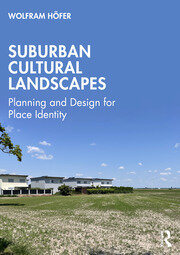
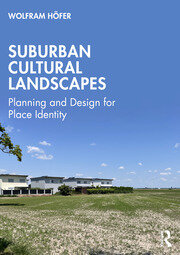
Suburban Cultural Landscapes Planning and Design for Place Identity
1. Introduction: The Concept of the Suburban Cultural Landscape 2. Nature, Landscape, and Settlement 3. In Search of Good Places to Live 4. The Industrial Landscape 5. Suburban Expansion 6. Suburban Cultural Landscapes in a Changing Climate
Biography
Wolfram Höfer is a Professor at the Rutgers of Department of Landscape Architecture. He received is doctoral degree from the TU München and serves as Director of the Rutgers Center for Urban Environmental Sustainability (CUES), his community outreach projects have a focus on suburban cultural landscapes.
“Many people, especially in North America, live in the suburbs. Wolfram Höfer presents a helpful framework for considering this important type of cultural landscape. It is a pleasure to enthusiastically recommend this wonderful book.”
Frederick Steiner, Dean and Paley Professor, University of Pennsylvania Stuart Weitzman School of Design
“Wolfram Höfer offers a compelling and highly original perspective on the cultural dimensions of suburban landscapes. Drawing on rich historical analysis and perceptive case studies—from the search for ‘good places to live’ to the narratives embedded in everyday suburban environments—this book reveals how suburbs are shaped not only by planning and development but also by deeply rooted cultural meanings. The discussion of vernacular landscapes in Budapest, Vienna, and the Ruhr Region is particularly insightful, demonstrating how ordinary suburban spaces carry complex identities and histories. Suburban Cultural Landscapes is an important and thought-provoking contribution to contemporary debates in landscape architecture and environmental planning.”
István Valánszki, Head of Department and Associate Professor, Department of Landscape Protection and Reclamation, Hungarian University of Agriculture and Life Sciences
“Suburban Cultural Landscapes by Wolfram Höfer offers a thoughtful exploration of how suburbs shape (and are shaped by) cultural, historical, and environmental forces. The book connects cultural landscape theory with urban and environmental planning and uses case studies from the United States and Europe to show how suburbs influence identity, sustainability, and quality of life. This book is especially valuable for students and professionals in urban planning, landscape architecture, geography, and environmental studies who want to better understand the cultural and spatial dynamics of suburban areas.”
Uli Paetzel, Emschergenossenschaft/Lippeverband, Chairman of the Board
“This fascinating book tracing the evolution of suburbs in the US and Central Europe is richly illustrated by case studies from New Jersey, Vienna, Budapest, and Germany’s Ruhr region. By examining suburbs as cultural landscapes, landscape architect Wolfram Höfer has provided a new perspective to study the past and inform the future of these ubiquitous landscapes. This book is a must-read for those involved in shaping the suburban landscapes that dominate our metropolitan regions.”
Robert L. Ryan, Professor, Department of Landscape Architecture and Regional Planning, University of Massachusetts, Amherst; Co-Author of Planning for Climate Change
"On the one hand, the American suburbia of New Jersey; on the other, the urban-rural peripheries of Vienna and Budapest, each with their own distinct Central European character; and finally, the intermediate city of the former mining region Ruhrgebiet — Wolfram Höfer ventures an intriguing comparison. Through the eyes of an environmental planner and cultural landscape researcher, we learn to understand suburbia in all its differences as cultural landscapes, and we recognize planning opportunities to transform them sustainably into good places to live."
Sibylla Zech, Professor of Regional Planning and Regional Development, Head of Research Unit of Regional Planning and Regional Development of Technical University Vienna
