





1st Edition
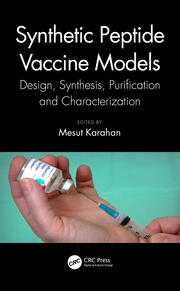
Synthetic Peptide Vaccine Models Design, Synthesis, Purification and Characterization
Chapter 1. Background
Emine Ekici
Chapter 2. Introduction to Vaccination
Nezih Pişkinpaşa and Ömer Faruk Karasakal
Chapter 3. Fundamentals of Modern Peptide Synthesis
Korkut Ulucan and Muhsin Konuk
Chapter 4. Peptide Synthesis and Characterization Stages
Mustafa Kemal Gümüş
Chapter 5. Conjugation of Polymers with Biomolecules and Polymeric Vaccine Development Technologies
S. Arda Ozturkcan
Chapter 6. What are Polymeric Carriers?
Gülderen Karakuş and Dolunay Şakar Daşdan
Chapter 7. Conjugation and Other Methods in Polymeric Vaccines
Özgür Özay
Chapter 8. Polymeric Nanoparticle Preparation Methods
Mithat Çelebi
Chapter 9. Peptides in Brain Disorders
Hüseyin Ünübol and Gökben Hızlı Sayar
Chapter 10. Pseudo-proteins and related synthetic amino acid based polymers promising for constructing artificial vaccines
Ramaz Katsarava
Chapter 11. Peptide Vaccines in Cancer Diseases
Özge Öznur Özcan, Rümeysa Rabia Kocatürk, Fadime Canbolat
Chapter 12. Antioxidant Peptides
Rümeysa Rabia Kocatürk, Fatmanur Zehra Zelka, Özge Öznur Özcan, Fadime Canbolat
Chapter 13. Peptide Vaccine
Joel Lim Whye Ern, Tan Shen Leng, Tee Yi Na and Palaniarajan Vijayaraj Kumar
Chapter 14. Adjuvants Of Vaccine in Immunotoxicology
Fadime Canbolat
Chapter 15. Role of Epigenetics in Immunity and Immune Response to Vaccination
Ozan Tiryakioğlu
Chapter 16. "Omics" technologies in vaccine research
Sezer Okay
Chapter 17. Computer-Aided Epitope Identification and Design of Epitope Mimetics.
Greg Czyryca
Biography
Assoc. Prof. Dr. Mesut Karahan graduated from Yildiz Technical University, Faculty of Arts and Sciences Department of Chemistry in 1999. Between 2001 and 2012, Dr. Karahan worked in Yildiz Technical University. He got his master’s degree in 2002 at the same university with his study titled "Ternary Polymer-Metal-Protein Complex Structure Models". Assoc. Prof. Dr. Karahan completed his Ph.D. studies in 2009 on "Development of Functional Biopolymer Systems Containing Metal”. He has been working at Üsküdar University since 2012. Working Areas: Vaccine Systems, Diagnostic Kit, Biochemistry, Biopolymer Systems, Peptide Synthesis, Proteins, Bioconjugation, Biopolymer-Metal-Peptide Complexes.
