




1st Edition
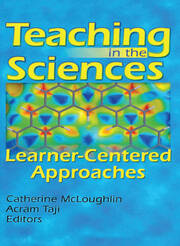
Teaching in the Sciences Learner-Centered Approaches
Edited By Acram Taji
Copyright 2005
228 Pages
by
CRC Press
228 Pages
by
CRC Press
Also available as eBook on:
Gain a clear understanding of what effective teachers do—and how successful students learn Over the past 20 years, a greater concentration on research aimed at both teaching and learning has revealed that “chalk and talk” teaching, copying notes, and “cookbook” practical lessons offer little challenge to students. Teaching in the Sciences: Learner-Centered Approaches... Read more
- About the Editors
- Contributors
- Foreword (Stephen Dinham)
- Introduction. Learner-Centered Approaches in the Sciences (Catherine McLoughlin and Acram Taji)
- Chapter 1. Student-Centered Ecology: Authentic Contexts and Sustainable Science (Susan Barker)
- Introduction
- Challenges in Teaching Ecology
- Experiential and Constructivist Approaches
- Learner-Centered Teaching Materials: Promoting Sustainability
- Fieldwork Teaching: Are Learner-Centered Approaches Possible?
- Learning Indicators
- Conclusion
- Chapter 2. The Use of ICT in Molecular Science Student-Centered Learning: A Developmental Approach (Philip L. R. Bonner)
- Introduction
- ICT and Student Learning
- CAL: A Learner-Centered Approach to Numeracy Problems
- Evolving Evaluation
- A Learner-Centered Approach to Laboratory Simulation
- Conclusion
- Chapter 3. The Undergraduate Life Sciences Laboratory: Student Expectations, Approaches to Learning, and Implications for Teaching (Janet Gorst and Susan Lee)
- Introduction
- A Review of the Literature
- A Laboratory Study
- Conclusion
- Chapter 4. Developing the Metacognitive and Problem-Solving Skills of Science Students in Higher Education (Rowan W. Hollingworth and Catherine McLoughlin)
- Introduction
- Linking Problem-Solving and Metacognitive Skills
- Teaching Problem Solving
- The Need for Ill-Defined Problem Types
- Design of Technology-Supported Metacognitive Training
- METAHEAD: An Online Tutorial to Support Metacognitive
- Conclusion
- Chapter 5. The Use of Distributed Problem-Based Learning and Threaded Discourse (Lisa Lobry de Bruyn)
- Introduction
- Background and Literature Review
- Description of Learning Activity
- Assignment Structure and Learner Support
- Evaluation of Learning Activity and Student/Instructor Experiences
- Conclusion
- Appendix
- Chapter 6. Problem Solving in the Sciences: Sharing Expertise with Students (Catherine McLoughlin and Rowan W. Hollingworth)
- Introduction
- Background
- Novices and Experts
- Developing Self-Knowledge
- The Need for Open-Ended Tasks
- Recommendations for Teaching Problem Solving
- Conclusion
- Chapter 7. Student-Centered Learning Support in the Sciences (Robyn Muldoon)
- Introduction
- Supportive Pedagogies for Students in the Sciences
- The Faculty Mentor Program at UNE
- Conclusion
- Chapter 8. “Drowning by Numbers”: The Effectiveness of Learner-Centered Approaches to Teaching Biostatistics in the Environmental Life Sciences (Debra L. Panizzon and Andrew J. Boulton)
- Introduction
- The Constructivist Framework: Two Common Threads
- Challenging Alternative Conceptions in Biostatistics
- Encouraging a Deep Approach to Learning
- Conclusion
- Chapter 9. Application of ICT to Provide Feedback to Support Learning in First-Year Science (Mary Peat, Sue Franklin, and Charlotte Taylor)
- Introduction
- Diversity of Australian First-Year Science Students
- Supporting First-Year Science Students with Relevant Feedback
- Provision of Online Feedback to First-Year Biology Students at the University of Sydney
- Use of Feedback in the Development of Scientific Writing Skills
- Use of Computer-Based Self-Assessment Modules Providing Feedback
- Conclusion
- Chapter 10. Assessing for Learning in the Crucial First Year of University Study in the Sciences (Frances Quinn)
- Introduction
- Dimensions of Assessment
- Assessment Strategies for First-Year Science
- Specific Assessment Techniques for Large First-Year Science Classes
- Conclusion
- Chapter 11. Exploring the Usefulness of Broadband Videoconferencing for Student-Centered Distance Learning in Tertiary Science (Robyn Smyth)
- Introduction
- A Conceptual Framework: Pedagogy, Philosophy, and Transitions
- Teaching for Student Engagement in Science
- Exploring the Usefulness of Broadband Videoconferencing
- Developing a Conceptual Framework to Plan Potential Student Engagement
- Conclusion
- Index
- Reference Notes Included
Biography
Taji, Acram
