




168 Pages
by
Routledge
166 Pages
by
Routledge
166 Pages
by
Routledge
Also available as eBook on:
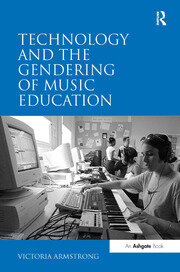
Critical of technologically determinist assumptions underpinning current educational policy, Victoria Armstrong argues that this growing technicism has grave implications for the music classroom where composition is often synonymous with the music technology suite. The use of computers and associated compositional software in music education is frequently decontextualized from cultural and social... Read more
Contents: Introduction; Challenging technological determinism in the music education classroom; Gendered cultures in the music technology classroom; Gendering technological expertise; Gendering the musical idea; Computers as a medium for composition; Reclaiming compositional spaces; Conclusion; Bibliography; Index.
Biography
Dr Victoria Armstrong, St Mary's University, Twickenham, UK
'In this sharp analysis Victoria Armstrong lays bare many of the unexamined assumptions that lie behind our everyday musical practices. Illustrated throughout with entertaining, but critically analysed vignettes from everyday life in the music technology classroom, her discussion has relevance for so much else besides: the sociology of music in general, the sociology of technology, gender and education, studies of creativity, and musical meaning. The book challenges not only school teachers but university lecturers, students and all users of music technology - or indeed those who avoid using it - to stop and think again.' Lucy Green, London University Institute of Education '...this a valuable resource for students of music education and a must for gender studies... The bibliography and index are thorough... Recommended.' Choice ’... the remedial proposals [Armstrong] puts forward in the final chapter as ways of helping to redress the gender imbalance are persuasive and thought-provoking.’ British Journal of Educational Technology ’Victoria Armstrong’s book marks an important step in increasing the awareness of how music technology and the cultures surrounding it influence music making practices for students and teachers... Undoubtedly this worthwhile book offers important insights into music technology’s place in schools, making a clear case for gender equity in music education being more than just a matter of equal access to equipment. It challenges us to reconsider the role of technology in contemporary education through a greater awareness of the variety of practices, cultures and social meanings that emerge through and around its use. Recommended reading for anyone involved in the teaching of music.’ Music Education Research Journal ’... fluent, articulate and critical throughout. It engages with a broad range of ideas and there are constant provocations that got me thinking. It is hard to argue with her central thesis and her implications for
