





1st Edition
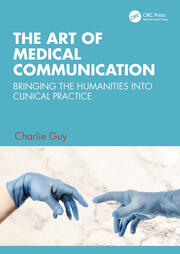
The Art of Medical Communication Bringing the Humanities into Clinical Practice
- Chapter 1: Introduction
- Chapter 2: A Definition of the Humanities
- Chapter 3: The Role of the Humanities in Medicine Through Time
- Chapter 4: Medical Ethics
- Chapter 5: Case Scenarios 1
- Chapter 6: The Art of Communication in Practice
- Chapter 7: Case Scenarios 2
- Chapter 8: The Art of Reflection
- Chapter 9: Reflective Models
- Chapter 10: Conclusion
- Appendix 1 – Structured Reflective Templates
1a. Establishing Rapport - People are Social Animals
1b. When Rapport Breaks Down
1c. The Role of the Humanities within Professional Distancing
1d. Models of Communication
1e. Modes of Communication
2a. The Two Hemispheres
2b. C.P. Snow - The Great Divide
2c. What Can the Humanities do for Science?
2d. Cool Story, Poe - Theory of Mind
2e. The Notes Between the Notes Between the Notes: Talking to Eds Chesters
2f. Issues of Accessibility
3a. Frankenstein: or the Modern Prometheus (Frankenstein)
3b. Typhoid Fever: There’s Something About Mary Mallon
3c. The AIDS Crisis: ‘Art Lives on Forever’
3d. Write Your Own Narrative Journey
4a. The Ethics of Persuasion
4b. Fake News - When Storytelling Cancels Science
4c. The Telephone Game: When Storytelling Goes Wrong
4d. The Tabloid Press
4e. Children in the Media
5a. Case Scenario 1a: Azzura (Aggie) Romano
5b. Case Scenario 1b: Oscar James Thompson
5c. Case Scenario 1c: Arnold Gaylor
5d. Case Scenario 1d: Nihal Anand
5e. Case Scenario 1e: Abby Sable-Adamson
6a. Gillian Lynne - ‘Wriggle Bottom’
7a. Case Scenario 2a - Dermatology
7b. Case Scenario 2b – DNACPR
7c. Case Scenario 2c – ‘Wild Goose Chase’
7d. Case Scenario 2d – Neurosurgery
8a. Jean-Dominique Bauby - The Case of Patient A
9a. Rolfe et al.’s Three-stage Model of Reflective Practice (2001)
9b. Kolb’s Reflective Model of Experiential Learning (1984)
9c. Gibbs Reflective Cycle (1988)
11a. Template 1 – Rolfe et al.’s Three-Stage Model of Reflective Practice (Rolfe et al, 2001)
11b. Template 2 –Kolb’s Reflective Model of Experiential Learning (1984)
11c. Template 3 –Gibbs Reflective Cycle (1988)
Index
Biography
Charlie Guy is a qualified anatomist and social historian who has undertaken a variety of roles within the NHS and is based in Fife, Scotland.
