





1st Edition
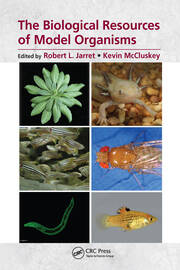
The Biological Resources of Model Organisms
1. Introduction to the Laboratory Axolotl and the Ambystoma Genetic Stock Center. 2. The Genetic Resources of Arabidopsis thaliana: The Arabidopsis Biological Resource Center. 3. The Bacillus Genetic Stock Center/Bacillus subtilis. 4. Genetic Resources of Rotifers in the Genus Brachionus. 5. The Caenorhabditis Genetics Center (CGC) and the Caenorhabditis elegans Natural Diversity Resource. 6. The Chlamydomonas Resource Center. 7. The Zebrafish International Resource Center. 8. The Bloomington Drosophila Stock Center: Management, Maintenance, Distribution, and Research. 9. The Fungal Genetics Stock Center Supporting Foundational and Emerging Model Systems. 10. The Peromyscus Genetic Stock Center. 11. The Tetrahymena Stock Center: A Versatile Research and Educational Resource. 12. The National Xenopus Resource. 13. Xiphophorus Fishes and the Xiphophorus Genetic Stock Center. 14. ATCC: The Biological Resource Center for the Future.
Biography
Robert Jarret was born and raised in Franklin, Massachusetts and graduated from the local high school. After a tour with the US Navy, he attended Bridgewater State College majoring in Biology. Graduate studies were completed at Purdue University (M.S. and Ph.D.) and Colorado State University (MBA). He worked for a period of time at the Centro Agronomico Tropical de Investigacion y Ensenanza (CATIE) in Costa Rica and subsequently at the University of Florida (Homestead), eventually moving to his present position. His research activities combine field and laboratory activities and are often multi-disciplinary and typically focused on the conservation and characterization of genetic resources/diversity. In addition to conducting research, he curates collections of various crop and crop-related taxa. He currently resides in Griffin, Georgia.
Kevin McCluskey obtained his Bachelors and Masters degrees at Stanford University. After working in an MIT lab developing applications for a prototype Positron Emission Tomography system, he obtained his Doctorate in Botany and Plant Pathology at Oregon State where he pioneered the application of pulsed field gel electrophoresis to study the genomes of plant pathogenic fungi. Following a post-doctoral fellowship studying Fusarium at the University of Arizona, he accepted the position of Curator of the Fungal Genetics Stock Center. As curator, he developed the FGSC website and the databases that allow clients to identify and request materials. He is a scientific member of the US National Genetic Resources Advisory Council and also served two terms on the American Phytopathological Society Public Policy Board. Dr. McCluskey has published over 50 articles and chapters on fungal genetics and genomics. He retired from the FGSC in 2018 and is currently working in biotechnology.
