





1st Edition
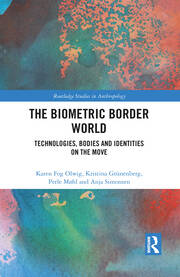
The Biometric Border World Technology, Bodies and Identities on the Move
Introduction
I. In the laboratory
Kristina Grünenberg
Introducing the Site
1. Body Cartographers: Mapping Bodies and Borders in the Laboratory
2. The ‘Biometric Community’: Friends, Foes and the Political Economy of Biometric Technologies
Epilogue
II. On the border
Perle Møhl
Introducing the Site
3. Vision, Faces, Identities: Technologies of Recognition
4. ‘Is It a Donkey?’ Presences, Senses and Figuration in Human-technological Border Control
Epilogue
III. En route
Anja Simonsen
Introducing the Site
5. Fleeting (Biometric) Encounters: Care and Control at Italian Border Sites
6. ‘In-formation’ and ‘Out-formation’: Routines and Gaps En Route
Epilogue
IV. In the family
Karen Fog Olwig
Introducing the Site
7. Biometric Verification Vs. Social Validation of Relations of Kinship: Somali Refugees in Denmark
8. Mouth Swabs and Other Techniques of Verification: Determining Refugees’ Rights to a Family Life
Epilogue
Conclusion
Biography
Karen Fog Olwig is Professor in the Department of Anthropology at the University of Copenhagen, Denmark.
Kristina Grünenberg is Associate Professor in the Department of Anthropology at the University of Copenhagen, Denmark.
Perle Møhl is Researcher at CAMES – Copenhagen Academy for Medical Education and Simulation, Denmark.
Anja Simonsen is Assistant Professor in the Department of Anthropology at the University of Copenhagen, Denmark.
