




312 Pages
by
Routledge
312 Pages
by
Routledge
286 Pages
by
Routledge
Also available as eBook on:
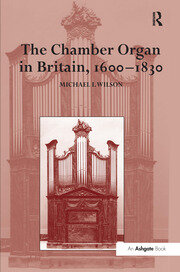
The first edition of The English Chamber Organ was published in 1968. This new, revised edition takes into account the considerable research into chamber organs that has taken place over the last thirty years. Much of the book has been completely rewritten and expanded, and it includes a number of organs not detailed in the first edition. As its revised title suggests, this new edition covers... Read more
Contents: Pitch notation; The social and musical background: Origins and early days; From Smith to status symbol; The Handel/Snetzler era; Designed to impress; A slow decline; Construction: Aspects of organ-building; The organs: A Catalogue: Introductory note; 1600-1660; 1660-1710; 1740-1780; 1780-1830; Appendices: A note on chamber organs in Scotland; Who were Longman and Broderip?; Some chamber organs on CD; Gazetteers; Supplementary bibliography; Index.
Biography
Michael I. Wilson
'It is excellent that the book is available again...' Early Music Review '...this book offers an interesting story, and is a valuable reference tool; it should be widely welcomed.' Early Music 'Viewed as a whole...there is much of interest and relevance in Mr Wilson's book, and I shall regularly return to it as an informative and widely ranging source of organological reference ... a worthy successor to the first edition, beautifully presented... this expanded new edition deserves to enjoy renewed success.' Journal of the Dolmetsch Foundation '... It's all fascinating, and one hesitates to single out this part or that; however, the portions on Handel and the organ are especially noteworthy... The revised and expanded catalogue of instruments is carefully annotated and far broader and more exhaustive than in the 1968 volume... Michael I. Wilson is certainly to be congratulated. His landmark study, The English Chamber Organ, was definitive both in its time and over the three and a half decades since it appeared. Now Wilson himself has superseded it with The Chamber Organ in Britain, a similarly definitive, landmark study on the subject, and one whose scholarship will doubtless stand up just as well over the coming decades.' The Diapason '... could prove extremely useful, for example, in bringing our understanding of English organ aesthetics into sharper focus, or in clarifying the as-yet little-explored interplay between church and chamber contexts.' ECCB
