




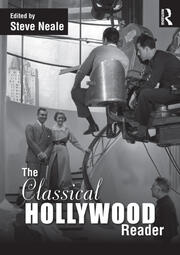
Introduction. Prologue 1. Emotional Curves and Linear Narratives Patrick Keating Part 1: Feature Films, Hollywood and the Advent of the Studio System, 1912-1926 Introduction 2. The Quality Race: Feature Films and Market Dominance in the US and Europe in the 1910s Gerben Bakker 3. Making Movies, 1915-1928 Richard Koszarski 4. The Limits of Experimentation in Hollywood Kristin Thompson 5. "Doing a Man’s Work" The Rise of the Studio System and the Remasculinization of Filmmaking Karen Ward Mahar 6. Hollywood’s Conception of its Audiences in the 1920s Lea Jacobs and Andrea Cominsky Part 2: Sound and the Studio System, 1926-1946 Introduction 7. The Coming of Sound: Technological Change in the American Film Industry Douglas Gomery 8. Hollywood Babel: Ginette Vincendeau Considers the Coming of Sound and the Multiple Language Version Ginette Vincendeau 9. Organization Howard T. Lewis 10. Hollywood: The Triumph of the Studio System Thomas Schatz 11. Cinemagoing in the United States in the Mid--1930s: A Study Based on the Variety Dataset Mark Glancy and John Sedgwick 12. Selling Stars Tino Balio Part 3: Representation, Technology, Production and Style, 1926-1946 Introduction 13. The Production Code and the Mythologies of "Pre-Code" Hollywood Richard Maltby 14. Commanding the Sounds of the Universe: Classical Hollywood Sound Helen Hanson and Steve Neale 15. The Classical Hollywood Film Score Kathryn Kalinak 16. Shooting for Selznick: Craft and Collaboration in Hollywood Cinematography Patrick Keating 17. Order and Plenitude: Technicolor Aesthetics in the Classical Era Scott Higgins 18. The Disney-Fleischer Dilemma: Product Differentiation and Technological Innovation Mark Langer Part 4: Postwar Hollywood and the End of the Studio System, 1946-1966 Introduction 19. Individualism versus Collectivism: Janet Staiger Reconsiders the Shift to Independent Production in the US Film Industry Janet Staiger 20. Ozoners, Roadshows and Blitz Exhibitionism: Postwar Developments in Distribution and Exhibition Sheldon Hall 21. Glorious Technicolor, Breathtaking CinemaScope, and Stereophonic Sound John Belton 22. Hollywood and Television in the 1950s: The Roots of Diversification Janet Wasko 23. Hollywood and Politics in the 1940s and 1950s Brian Neve 24. Arties and Imports, Exports and Runaways, Adult Films and Exploitation Steve Neale. Epilogue. Bibliography. Index
Biography
Steve Neale is Professor and Chair in Film Studies, in the School of English at Exeter University, where he teaches Introduction to Film, Hollywood and Europe, Comedy, Comedians and Romance, and Film Noir. He is an internationally renowned film studies scholar. His research focuses principally on history and theory of Hollywood cinema and he has published several publications in these areas.
Since 2004, Professor Neale has been the Academic Director for the Bill Douglas Centre for the History of Cinema and Popular Culture.
'Classical Hollywood Reader is a collection of absorbing essays... the new collection adopts a chronological approach. The early chapters offer a fascinating analysis of the emergence of the studio system 1912-26 in Hollywoodland, explaining why a suburb of Los Angeles displaced the original focal point of US movie production in the New York area. Within this history there are a number of fresh perspectives. Gerben Nakker looks at how, having become the signifier for American cinema, Hollywood triumphed over what had been significant competition from European filmmakers... One of the strengths of The Classical Hollywood Reader is that it makes a point of addressing film as a commercial and creative enterprise, which means its interests extend beyond the mechanics of filmmaking.' - pictureville.net
