




1st Edition
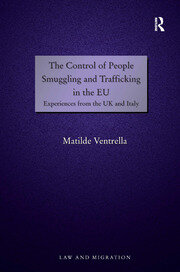
The Control of People Smuggling and Trafficking in the EU Experiences from the UK and Italy
By Matilde Ventrella
Copyright 2010
288 Pages
by
Routledge
288 Pages
by
Routledge
288 Pages
by
Routledge
Also available as eBook on:
This book examines the smuggling of migrants and trafficking in human beings in the EU with a comparative analysis of how British and Italian law has approached the issues. The work also analyzes the role of cooperation between the police and judiciary in combating criminal organizations involved in these crimes. The author draws on evidence from the Italian cities of Rimini and Siracusa and from... Read more
Contents: Preface; Introduction; The limits of law; EU law enforcement measures; EU migration policies; Comparative analysis of British and Italian law; Conclusion; Bibliography; Index.
Biography
Matilde Ventrella has a law degree from the University of Bari (Italy), a LLM from the University of Dundee and a PhD from the University of Birmingham. Matilde works as a freelance researcher on asylum and immigration issues and for the Online Master Programmes at the University of Liverpool, UK.
’The strength of the book lies in its convincingly argued thesis that the intensification and expansion of policing activities in and across the Mediterranean and the efforts to externalise border controls cannot reduce smuggling and trafficking unless those victimised in the course of migrating are protected by receiving states... Ventrella offers an up-to-date and thought-provoking discussion of the shortcomings of the current approach to irregular migration in the European Union as well as of the many ways in which the Union’s growing scope for action impacts on its Member States in this area... the book is an interesting contribution to the increasingly crowded field of migration-related studies and will be worthy of note for students looking for detailed coverage of the European Union’s action in this area as well as for policy-makers interested in the European Union’s expanding role on policing and immigration policy.’ European Law Review
