




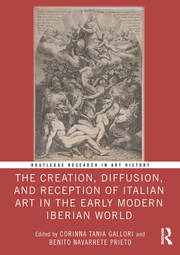
1st Edition
The Creation, Diffusion, and Reception of Italian Art in the Early Modern Iberian World
Introduction 1
BENITO NAVARRETE PRIETO AND CORINNA TANIA GALLORI
1 Italy-Spain in the Renaissance: Model, Active Reception, Reaction, and Rejection
FERNANDO MARÍAS
2 Valencia: Reflections on Art in a Mediterranean Metropolis of the
Fifteenth Century
MIGUEL FALOMIR FAUS
3 The Road between Vélez Blanco and Murcia in the Early Sixteenth
Century: A Southern Crossroad and the Italo-Spanish Dialogue
TOMMASO MOZZATI
4 Donatello, Michelangelo, or Titian: Notes on Replicating and Rereading
Images in Sixteenth-Century Hispanic Sculpture
MANUEL ARIAS MARTÍNEZ
5 Marcantonio Goes Global
MARZIA FAIETTI
6 The “Apocalipsis de San Amadeo” from Renaissance Italy to Viceregal
America: Veiling and Revealing Visual Arcana
ESCARDIEL GONZÁLEZ ESTÉVEZ
7 The Reception and Translation of Vasari as a Painter: The Concezione
di Nostra Donna Outside Italy
ELENA ESCUREDO
8 From Rome to Seville, Then to Lima, and Back to Seville: An Italian
Model and Two Crucifixions by Juan Martínez Montañés
JOSÉ RIELLO
9 Three Pistils, Three Nails: The Passion Flower and the Debate on the
Iconography of the Crucifixion in Early Seventeenth-Century Spain
JOSÉ RAMÓN MARCAIDA
10 Neapolitan Sculpture in the Hispanic World: Circulation and Reception
ROBERTO ALONSO MORAL
Index
Biography
Corinna Tania Gallori is researcher for the Swiss National Fund project Building a Renaissance: Networks of Artists and Patrons from Ticino and Lombardy in Rome (1417– 1527), based at the Scuola Universitaria Superiore della Svizzera Italiana (SUPSI) of Mendrisio, as well as a member of the Circulation of images in the early modern artistic geographies of the Hispanic World (CIRIMA) research group.
Benito Navarrete Prieto is Full Professor of Art History at the Universidad Complutense de Madrid and the PI of the the Circulation of images in the early modern artistic geographies of the Hispanic World (CIRIMA) research group.
