





440 Pages
by
Routledge
440 Pages
by
Routledge
440 Pages
by
Routledge
Also available as eBook on:
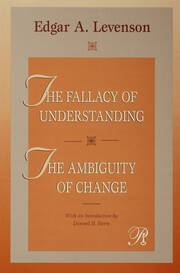
In The Fallacy of Understanding (1972) and The Ambiguity of Change (1983), Edgar Levenson elaborated the many ways in which the psychoanalyst and the patient interact - unconsciously, continuously, inevitably. For Levenson, it was impossible for the analyst not to interact with the patient, and the therapeutic power of analysis derived from the analyst's ability to step back from the... Read more
Stern, Introduction. The Fallacy of Understanding. Introduction: The Time-Bound Nature of Psychoanalytic Truth. "Things Fade: Alternatives Exclude" - Psychoanalytic Theory in Flux. Reviving the Ancient Search for Truth as Relevancy. Structuralism: A Modern Version of that Archaic Inquiry. The Paradigm: Pervasive Model of Change in Time. The Changing Model of Psychoanalytic Theory. The Changing Model of the Psychoanalytic Patient. From Anna O To Portnoy: A Perspectivist Reassessment. The Emergence of the Young Adult as Man of His Times. Dropping Out: Contemporary Psychopathology. Treating the Dropout: The Politics of Concern. Clinical Elaborations: The Choreography of Psychotherapy. "They Became What They Beheld": Transformation Elaborated. Focusing the Therapy Issues. Conclusion: Summary and Feeble Prognostications. The Ambiguity of Change. Introduction. Freud's Choice: Facts or Fiction. The Oedipus Myth: Conflict or Mystery. Psycholigical Process: Dynamics or Semiotics. The Symptom as Meaning: Intrapsychic vs. Interpersonal Perspectives. Praxis: The Common Ground of Therapy. Praxis: The Field of Play. Praxis: Uses of the Transference. Psychoanalysis: Cure or Persuasion. The Moral Posture: Sincerity or Authenticity. Models of the Mind: Landscape or Network . Harry Stack Sullivan: The Web and the Spider. Object Relations Theory: Bridge or Bypass. Conclusion.
Biography
Edgar Levenson
