




1st Edition
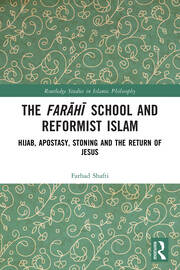
The Farahi School and Reformist Islam Hijab, Apostasy, Stoning and the Return of Jesus
Preface
1. Introduction
2. Emergence of a School of Thought
3. The Case Study of Stoning
4. The Case Study of Apostasy
5. The Case Study of Hijab
6. The Case Study of the Return of Jesus
7. The Methodological Features of the Farāhī School of Thought
8. Conclusion
Glossary
Biography
Farhad Shafti is Senior Lecturer at the Adam Smith Business School at the University of Glasgow, UK, holds a PhD in Islamic Studies, and is the founder of the Exploring Islam website.
“Scholars who are engaged in researching modern interpretations of Islam and the Qur'an should not miss this remarkable work which deals with the Farāhī school. Focusing on their distinctive method of Quranic interpretation the author presents an intriguing depiction of Farāhīs who offer a unique response to controversial issues such as stoning, apostasy, the hijab, and the death of Jesus. In short, the Farāhīs reach conclusions on such issues that dovetail neatly with concepts of modern human rights. Based on meticulous textual study and also on extensive meetings with Farāhīs, Dr Shafti has produced a work that is essential reading for students and researchers of modern Islamic thought.”
Professor Lloyd Ridgeon, University of Tokyo, Japan
“This groundbreaking study offers a lucid and intellectually rigorous analysis of the Farāhī school of thought, a significant yet under-examined movement in modern Qur'an-centred Islamic theology. In what stands as the first systematic exposition of the school's methodology, the author masterfully derives its key features through an analysis of some of the most contentious issues in Islamic law and theology, including apostasy, stoning, the ḥijāb, and the return of Jesus, offering compelling, Qur'an-centric resolutions. The work is uniquely enriched by the author's intimate, face-to-face engagement with the school's leading contemporary figures, particularly Javed Ahmed Ghamidi, providing unparalleled insight into the living and evolving nature of this intellectual tradition. This book is an indispensable resource for scholars of Islamic studies, scriptural hermeneutics, and comparative theology.”
Dr. Yaser Mirdamadi, The Institute of Isma‘ili Studies, UK
