





1st Edition
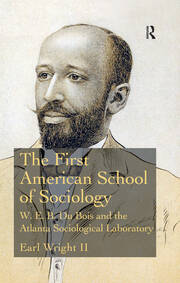
The First American School of Sociology W.E.B. Du Bois and the Atlanta Sociological Laboratory
Preface
1. From the cotton field to the classroom
2. ‘We study the problems that others talk about’
3. The contributions of the Atlanta Sociological Laboratory to the discipline
4. Crashing thru the gate(keepers)
Bibliography
Index
Biography
Earl Wright II is Professor in the Department of Anthropology and Sociology at Rhodes College, USA, and recipient of the 2016 Charles S. Johnson Award from the Southern Sociological Society. He is the co-editor of Re-Positioning Race: Prophetic Research in a Post-Racial Obama Age and The Ashgate Research Companion to Black Sociology.
‘An important, compelling, and much-needed book on one of the greatest and yet least-known chapters of sociology in America. Highly recommended for anyone interested in W.E.B. Du Bois, race, or the social sciences in America - or all three.’
Phil Zuckerman, Pitzer College, USA
‘Wright is the first sociologist to present a well-documented, carefully crafted, and insightful critique of the methods of the individual Atlanta Sociological Laboratory studies conducted and edited by Du Bois. In doing so, he has made the case why, based on their research questions, methodologies and theoretical assertions, these studies have a rightful place within the canons of mainstream sociology.’
Rutledge M. Dennis, George Mason University, USA
‘The book represents an important contribution to the growing literature on the life and work of W.E.B. Du Bois. It is the first work of its kind to focus on the contribution of the Atlanta Sociological Laboratory led by Du Bois. The author’s explanation of the failure to give recognition to this pioneering accomplishment is insightful and provides remedies to undo the "miseducation" of generations of sociologists.’
Delores P. Aldridge, Emory University, USA
'The First American School is a valiant primer for sociologists, historians, and lay students of Du Bois that indexes with cogency and accessibility the contents of the Atlanta Laboratory studies and how they were accomplished. In this function, Wright makes a standalone contribution.'
Kali-Ahset Amen, Emory University, Atlanta Studies
