




2nd Edition
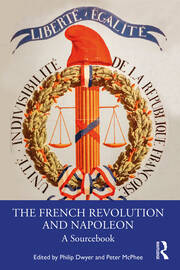
The French Revolution and Napoleon A Sourcebook
1. The Ancien Régime Challenged 2. Revolutionary Action 3. Creating a Regenerated France 4. Exclusions and Inclusions 5. The Church and the Revolutionary State 6. International Reactions to the Revolution 7. Monarchy and Revolution 8. The Revolution At War 9. The End of the Monarchy 10. The Peasantry and the Rural Environment 11. Debating Women’s Role in the Revolution 12. A New Civic Culture 13. The Republic at War 14. Revolt in the Vendée 15. Slavery and Emancipation 16. 'The Terror' at Work 17. The Thermidorian Reaction 18. The Directory 19. The Rise of Napoleon 20. Law and Order 21. God, the People, and the Empire 22. Governing the Empire 23. The Experience of Warfare 24. Living Under the Empire 25. Resistance and Repression 26. The Russian Catastrophe 27. The Anti-Napoleon 28. Collapse 29. The Hundred Days 30. Reflecting on Revolution and Empire
Biography
Philip Dwyer is Professor of History and founding Director of the Centre for the Study of Violence at the University of Newcastle, Australia. His books include Napoleon: The Path to Power (2008); Citizen Emperor: Napoleon in Power (2013); and Napoleon: Passion, Death and Resurrection, 1815–1840 (2018). He is co-editor of The Cambridge History of the Napoleonic Wars (2022). He is currently writing a global history of human violence.
Peter McPhee is Emeritus Professor of History at the University of Melbourne, Australia. His books include Living the French Revolution 1789–1799 (2006); Robespierre: a Revolutionary Life (2012); and Liberty or Death. The French Revolution 1789–1799 (2016). He is currently working on a book on the history of the French landscape 1770–2020.
