





1st Edition
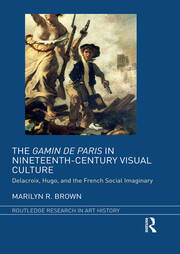
The Gamin de Paris in Nineteenth-Century Visual Culture Delacroix, Hugo, and the French Social Imaginary
Table of Contents
List of Illustrations
Acknowledgments
Introduction
Ch. 1 Revolutionary Ancestors of the Gamin de Paris
Ch. 2 Child of the People and Child of the Fatherland in Nineteenth-Century French Social History
Ch. 3 Child of the People and Child of the Fatherland in the French Social Imaginary
Ch. 4 The Gamin de Paris and the Revolution of 1830
Ch. 5 The Gamin de Paris in Panoramic Literature and in the Revolutions of 1848
Ch. 6 The Gamin de Paris, the Second Empire, and the Commune
Ch. 7 The Gamin de Paris during the Early Third Republic
Epilogue
Bibliography
Biography
Marilyn R. Brown is author of Degas and the Business of Art: A Cotton Office in New Orleans (CAA Monograph, 1994) and editor of, and contributor to, Picturing Children: Constructions of Childhood Between Rousseau and Freud (Ashgate, 2002; Routledge 2017). She is professor of art history at the University of Colorado.
"Brown’s meticulously researched illuminating study of the trajectory of the gamin across the nineteenth century makes a compelling case for the centrality of the gamin topos in French visual culture ... In her perceptive critical reading of individual images Brown offers a compelling demonstration of the challenges and rewards of examining visual culture in relation to political events and the vicissitudes of history."
--Nineteenth-Century Art Worldwide
