




1st Edition
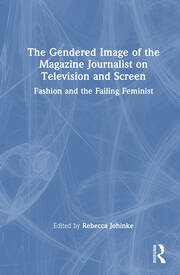
The Gendered Image of the Magazine Journalist on Television and Screen Fashion and the Failing Feminist
Introduction: The Image of the Female Magazine Journalist in Popular Culture Rebecca Johinke Section One: The Tabloids and Scandals: 1950s Origins of Magazine Workplaces on Screen 1. The Sour Smell of Success: Hollywood and the Scandal Magazines of the 1950s Richard R. Ness 2. Midcentury Postmodern Magazine Gender: The Meta Media Moment of The Best of Everything Quinlan Miller Section Two: Fashion or Feminism? Iconic Female Magazine Editors on Screen 3. The Devil Knows How to Wear Prada: Critiquing or Celebrating Fashion Magazine Culture in the Contemporary Fashion Film The Devil Wears Prada? Niall Richardson 4. Paper Giants: The Birth of Cleo: The Magazine Editor, Leadership, and Creativity Rosemary Williamson, Wyatt Moss-Wellington, and Lili Pâquet 5. Mademoiselle C and the French Girl cliché Justine Brisset and Joke Hermes Section Three: Romance and the Double Bind: Careers for Women in Depictions of Magazine Journalism on Screen 6. Suddenly Susan and the aspirational media professional Myles Ethan Lascity 7. Soft news, strong women: post-feminist mentality and genre expectations in magazine workplace Rom-Coms Mayka Castellano and Melina Meimaridis 8. I’m Not Here To Make Friends: The Ideal Intern In Magazine Reality Television Beth Montemurro and Grace Kelly 9. Gender Dynamics in The Bold Type: Between Reality and Aspiration Maxine De Wulf Helskens 10. The Depiction of Female Journalists in Inventing Anna Chad Painter Section Four: Race, Beauty and Body Types: Challenging Stereotypes about Female Magazine Journalists on Television 11. Living Single’s Flavor: Representing a Black Culture Magazine Lisa Anderson and Rebecca Johinke 12. Fashioning femininity: Race, class, belonging, and the limits of transformation in Ugly Betty Jennifer Esposito 13. Ugly Betty Goes Streaming: Global Networks of Localized Content in the Telenovela Industry Jade L. Miller 14. Beauty, violence, and the fat body: Dietland and the magazine as manifesto Rebecca Johinke
Biography
Rebecca Johinke is an Associate Professor in the Discipline of English and Writing, at the University of Sydney, Australia. Her research interests are broad and interdisciplinary, but her work typically examines issues related to gender and popular culture. She has published many articles and chapters on Australian film (car culture and Ozploitation genre films) and about magazines, magazine editors, and the image of the journalist in popular culture. Queens of Print, her first book about Australian magazine editors, was published by Australian Scholarly Publishing in 2019. Her work about writing and the scholarship of teaching and learning also appears in many journals.
The Gendered Image of the Magazine Journalist on Television and Screen: Fashion and the Failing Feminist is a remarkable collection of articles, expertly edited by Rebecca Johinke, dealing with an often neglected but important aspect of the image of the journalist in popular culture. This essential book features 19 contributors ranging from a pioneer in the field (Richard Ness’ “The Sour Smell of Success: Hollywood and the Scandal Magazines of the 1950s”) to one the field’s brightest new stars (Maxine De Wulf Helskens’ “Gender Dynamics in The Bold Type: Between Reality and Aspiration”) surrounded by a host of excellent scholars. The book carefully considers key questions as it examines representations of magazine journalists on the large and small screen: how is feminism reflected in fashion or style? Are characters who work primarily in fashion considered feminists? Can women still claim the title “journalist” or “feminist” if they work on glossy magazines or tabloids? How does popular culture depict these women? This book is an important addition to the growing scholarship dealing with the image of the journalist in popular culture.
Joe Saltzman, Professor of Journalism and Communication, and Director, The Image of the Journalist in Popular Culture (IJPC), a project of the Norman Lear Center, Annenberg School for Communication and Journalism, University of Southern California
Combining chapters from an impressive list of scholars, The Gendered Image of the Magazine Journalist on Television and Screen: Fashion and the Failing Feminist is a timely addition into the literature on depictions of journalists in popular culture. By focusing on magazine journalists, the book provides a more nuanced understanding of how gender is depicted in these artifacts, and what it means for our understandings of journalism.
Pat Ferrucci, Professor and Chair, Department of Journalism, University of Colorado Boulder
Only Rebecca Johinke could bring together 19 international researchers in a book that analyses the portrayal in film and television of women working in the world of magazines, whether as journalists or editors. Across 14 chapters, carefully organised into four thematic sections, the reader discovers on every page the social, political and cultural messages embodied by the female characters as they navigate the worlds of fashion, lifestyle and gossip, always with magazines as the backdrop. An invaluable resource for academics across a wide range of disciplines, from Magazine Studies to Journalism, Film, Television, Media, Gender Studies and Feminism. The scope of Fashion and the Failing Feminist: The Gendered Image of the Magazine Journalist on Television and Screen extends beyond academia; it is a book that can be read by anyone interested in gaining a better understanding of the behind-the-scenes dynamics of media representations of women. Finalised whilst filming for “The Devil Wears Prada 2” was underway, the media frenzy caused by the sequel to the iconic 2006 film clearly demonstrates that this book could not be more relevant.
Carla Rodrigues Cardoso, Scientific Coordinator, Journalism & Magazine Lab, CICANT | Lusófona University, Portugal
