




1st Edition
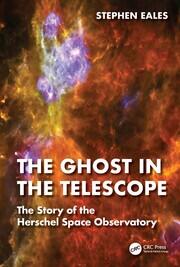
The Ghost in the Telescope The Story of the Herschel Space Observatory
Guide to Acronyms and Astronomers’ Jargon
Chapter 1. Launch
Chapter 2. Beginnings
Chapter 3. Dust Stories
Chapter 4. Whiteboard Memories
Chapter 5. The Makers
Chapter 6. The Astronomers
Chapter 7. Minding the Heavens
Chapter 8. First Light
Chapter 9. Cruising the Aquila Rift
Chapter 10. Data Monkeys and Cooler Burps
Chapter 11. The Birth of a Galaxy
Chapter 12. Andromeda Dreams
Chapter 13. Whoomph!
Chapter 14. The Water Trail
Chapter 15. The Museum
Acknowledgments
Notes and References
Biography
Stephen Eales spends his time trying to understand the births and life cycles of galaxies, using telescopes all over the world and in space. He is the author of over 300 peer-reviewed papers and, in 2016, he was awarded the Herschel Medal by the Royal Astronomical Society for his contributions to observational astrophysics.
'Stephen Eales’s The Ghost in the Telescope is a superbly accessible but deeply informative journey into the life of ESA’s Herschel Space Observatory. With a narrative rooted in his direct involvement, Eales invites readers behind the scenes, from the first conceptual scribbles in Venice to the emotionally charged post-mission decision of whether or not to dispose of the spacecraft by crashing it into the Moon.
Containing enough images to bring the text to life, this 256-page volume masterfully reminds us how much of the universe is hidden from our traditional ‘visible’ gaze. Eales deftly navigates complex scientific terrain such as star formation, nascent galaxies, and interstellar chemistry without leaving the readers behind and weaves his own story and memories into the narrative to breathe some more personal life into the book.
Particularly striking is how the book captures the emotional arc of a space mission – its inception, triumphs, and poignant conclusion. From design decisions and ‘whiteboard memories’ to the final fade-out when Herschel’s cryogen coolant ran dry, Eales conveys the passion, ingenuity, and fragility that define cutting-edge space astronomy.
It’s a fascinating read because it portrays not just the results of modern-day astronomical research, but also the human endeavour required to make it happen.'
- Astronomy Now Magazine, October 2025.
