




1st Edition
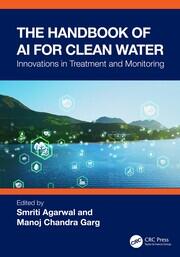
The Handbook of AI for Clean Water Innovations in Treatment and Monitoring
PART 1: UNDERSTANDING THE WATER CRISIS AND AI INTEGRATION
1. Introduction to the Global Water Crisis
Manoj Chandra Garg, Sheetal Kumari, Jyoti Chowdhry, Smriti Agarwal
2. Role of AI in Mitigating the Water Crisis
Charu Saxena
PART 2: AI APPLICATIONS IN WATER QUALITY MONITORING
3. Synergy of AI and Internet of Things (IoT) in Water Monitoring
Preeti Karki, Priyanjali Chowdhury, Joel Benny, Alakto Choudhury, Abhishek Sengupta, Priyanka Narad
4. Detecting Chemical Contaminants using AI
Dibyarupa Pal, Partha Sarathi Mandal, Ritam Paul, Avishek Kumar Kaser, Pranabi Maji
5. Artificial Intelligence Applications in Water Monitoring and Risk Management
Minh-Ky Nguyen
6. Advanced Dynamic Water Quality Assessment Using Machine Learning Algorithms
Elif Esra Altuner, Hasan Ulusb, Halil Burak Kaybalc, Fatih Send
PART 3: PREDICTIVE MODELING FOR EFFECTIVE WATER RESOURCE MANAGEMENT
7. AI-Driven Predictive Maintenance and Downtime Optimization in Water Treatment Plants
P. Balakrishnan, S. Marimuthu
8. Future Prospects : AI Innovations for Enhanced Water Management
Sundram Singh, Swati Sangolgi, Tapas Ranjan Das
9. AI and the Future of Water Scarcity: Machine Learning for Efficient Resource Management
Manjunathareddy G R, Raveesha H R
PART 4: AI REVOLUTIONIZING WATER TREATMENT
10. Automation and Process Optimization in Water Treatment
Neha Raghuwanshi, Shagun Sharma, Chaitanya Vijay Kale
11. Energy Optimization and Environmental Impact Reduction through AI
Ayoub Belcaid, Ayoub Ouarga
PART 5: AI COMBATTING CONTAMINANTS FOR SAFE DRINKING WATER
12. Detection and Mitigation of Microbial Threats using AI
Shubhrajit Sarkar, Ankita Mazumder
13. AI-Powered Decision Support Systems for Sustainable Wastewater Management: Addressing Nutrient Cycling and Heavy Metal Contamination
Qudrat Ullah, Muhammad Waqar, Vasanthkumar SS, Thanet Khomphet
PART 6: AI AND DESALINATION: A PATH TO WATER SECURITY
14. AI-Driven Optimization in Seawater Desalination
Sumeda Bandara, Thilini Bandara
PART 7: AI-INTEGRATED WATER POLICY AND GOVERNANCE
15. AI-Enabled Water Policy Formulation and Decision Making
M Kavitha and M Satthiyaraju
16. Investigation on Some Aspects of Data-Driven Insights for Effective Water Governance
Abhijit Bora, Lima Hazarika, Bamdeb Dey
17. Leveraging Data-Driven Approaches: A Case Study on Enhancing Water Governance in Africa
Basil Osayin Daudu, Salisu Ameh Amodu, Peace Ojochenemi Yakubu, Esther Besty Anaiye
PART 8: AI AND COMMUNITY ENGAGEMENT FOR WATER SUSTAINABILITY
18. Community-Centric Water Conservation using AI
Surya Pratap Singh, Sudarshana Banerjee, Diwesh Kumar, Shailesh Kumar Sarangi
PART 9: CHALLENGES AND FUTURE PERSPECTIVES
19. Ethical and Privacy Challenges in AI-Driven Water Management
Naveen Kumar, Devesh Singh, Piyush Sharma, Pankaj Kumar Chaurasia, Sunita Singh, Ajay
20. Environmental Impact of Artificial Intelligence in Water Management
Surya Konappan, Cheran Easwaran, Sathya Priya Ramalingam, Krishnan Ramanujam
21. Understanding Water Scarcity: The Role of AI in Sustainable Solutions
Elif Esra Altuner, Halil Burak Kaybal, Hasan Ulus, Fatih Sen
Biography
Smriti Agarwal is an accomplished academician and researcher with over 17 years of experience in teaching and research. She specializes in machine learning, AI‑driven optimization techniques, microwave and millimeter wave radar imaging, antenna design, and microwave absorbers. Currently, she serves as an assistant professor in the Department of Electronics and Communication Engineering at Motilal Nehru National Institute of Technology (MNNIT), Allahabad, a premier Indian institution of national importance.
Manoj Chandra Garg is an assistant professor at the Amity Institute of Environmental Sciences, Amity University Uttar Pradesh, with over 10 years of teaching and research experience. He earned his Ph.D. from the Indian Institute of Technology (IIT) Roorkee, focusing on solar photovoltaic‑assisted nanofiltration and reverse osmosis systems for water treatment. He also holds an M.Tech. in Environmental Science and Technology from Thapar University, where he was awarded a Gold Medal.
