




296 Pages
by
Routledge
296 Pages
by
Routledge
296 Pages
by
Routledge
Also available as eBook on:
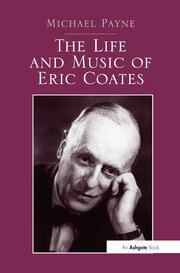
Eric Coates (1886-1957) is perhaps the most familiar name associated with British light music. Sir Charles Groves said that 'his music crackled with enthusiasm and vitality. He could write tunes and clothe them in the most attractive musical colours'. Coates won a scholarship to the Royal Academy of Music, and from 1912 to 1919 he was principal viola of the Queen's Hall Orchestra under Sir Henry... Read more
Contents: Preface; Part I The Early Years: Light music; A Nottinghamshire childhood, 1886-1906; The Royal Academy of Music and beyond, 1906-1910; The Queen’s Hall Orchestra and Miss Black, 1910-1918. Part II The Years of Struggle and Triumph: A freelance composer, 1918-1922; Maturity and jazz, 1923-1930; Success and popularity, 1931-1935; A new direction? 1936-1944. Part III The Establishment Figure: The war years, 1939-1945; The wilderness years, 1945-1951; Renown at last, 1951-1955; Envoi and legacy, 1956-1957; Appendices; Select bibliography; Index.
Biography
Michael Payne was born in Lancashire and received his first musical training as a chorister at Blackburn Cathedral. He read music at Durham University and received his Ph.D., with a dissertation on the music of Eric Coates, in 2007.
'A thoroughly enjoyable, and meticulously researched, book.' Journal into Melody 'At last, here is a scholarly biography of a person widely regarded as the leading figure in British light music... There is some diligent research into Coates’ dealings with the BBC. In fact, the book as a whole contains a wealth of admirably detailed and informative footnotes. Michael Payne makes a strong case for Coates’ pre-eminence in the field of light music, carefully helping the reader to recognize the high standards Coates achieved in his compositions... The author has done excellent service to the cause of British light music by this research, and his book will be valued as much by those who take light music lightly as those who take it seriously.' North American British Music Studies Association Newsletter
