



1st Edition
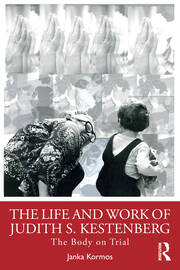
The Life and Work of Judith S. Kestenberg The Body on Trial
Data Availability Statement Disclaimer Acknowledgements Introduction 1. Life between Worlds 2. Moving Concepts, Bodies in Mind 3. An Ambivalent Reception 4. Issues of Belonging in the Psychological Sciences 5. Echoes and Afterlives 6. Patterns of a life
Biography
Janka Kormos is a Marie Curie Postdoctoral Fellow at the University of Cyprus, and a scholar of movement studies and embodied practices in the history of the psychological and medical sciences. Kormos led the creation of the Kestenberg Papers, a stand-alone archival collection housed at the Library of Congress.
‘This fascinating book is the result of rigorous, long-term research into the work of a largely forgotten innovator in the fields of psychoanalysis, child development, movement and trauma studies. It presents not only a long-awaited intellectual biography of Judith Kestenberg, but also places her work into a historical and scientific context that helps the reader to both understand and evaluate it. Kestenberg's psychoanalytic account of movement development and somatisation will be of great value to anyone interested in the role of the body in psychoanalysis, but also to psychologists, somatic therapists, historians, women's-history and gender studies scholars. Kormos' work also provides essential links between two parts of Kestenberg's work that are rarely viewed as a continuum: her studies of body movement and her pioneering work with child survivors of the Holocaust. A truly interdisciplinary, enjoyable and accessible read.’
Ana Tomčić, PhD, is a Postdoctoral Researcher in History at the Department of Psychoanalysis and Psychosocial Studies at the University of Essex (UK), where she is involved in the research of early free and low-cost psychoanalytic clinics in the UK and Central Europe.
‘This wonderful book offers a rigorous examination of Judith Kestenberg’s intellectual legacy, tracing her trajectory from Tarnów to Vienna to New York. It synthesises her diverse professional pursuits to highlight central themes of embodiment, social justice, and communal responsibility. By situating Kestenberg’s work within shifting sociopolitical, cultural, and religious frameworks, Kormos clarifies her engagement with and contributions to broader psychoanalytic traditions, further contextualising her among other often-marginalised foremothers, including Hug-Hellmuth, Spielrein, Deutsch, Benedek, and Mahler. This volume is an essential resource for scholars of psychoanalysis, psychiatry, dance/movement therapy, Jewish women’s history, and comparative genocide studies.’
Klara Naszkowska, PhD, is an Adjunct Professor of Gender, Sexuality, and Women’s Studies at Montclair State University (New Jersey, USA), Founding Director of the International Association for Spielrein Studies, and editor of the 2025 Gradiva award-winning volume - Early Women Psychoanalysts: History, Biography, and Contemporary Relevance (Routledge).
‘This book offers a rigorous, in-depth intellectual biography of a pioneering twentieth-century psychoanalyst. Through her research into child development, body movement and child survivors of the Holocaust, Judith Kestenberg developed a body of knowledge whose relevance and richness have yet to be fully recognised. An essential reading for anyone interested in the field.’
Fátima Caropreso, PhD, is a Full Professor in the Department of Psychology at the Federal University of Juiz de Fora (Brazil) and Visiting Fellow in the Department of Psychosocial and Psychoanalytic Studies at the University of Essex (UK).
‘Janka Kormos’s intellectual biography of Judith Kestenberg is an enjoyable and engaging read for anyone interested in the lesser-known life and oeuvre of this Polish-Jewish psychoanalyst émigré to the United States. Between the 1940s and the 1970s, Kestenberg forged a distinctive career in the male-dominated worlds of American psychiatry and psychoanalysis. The author skillfully shows how Kestenberg’s original contributions - her somatic approach to psychoanalysis, her developmental movement therapy, and her research into the psychosocial effects of the Holocaust - were interwoven and shaped by her experience and perspective, with the body at their centre. The book will be especially relevant to psychotherapists with a somatic orientation, as well as to readers interested in the history of psychoanalysis in this period. In tracing Kestenberg’s life and work, it also opens onto a wide range of issues that remain pressing in contemporary psychology and psychotherapy.’
Agnes Szokolszky, PhD, is a Docent at the University of Szeged (Hungary) and a researcher in the history of psychology, embodiment, and ecological approaches.
‘Janka Kormos’s book presents Judith Kestenberg’s life and work with remarkable breadth and sensitivity, examining her contributions through personal, professional, social, cultural, and critical lenses. The result is a richly layered scholarly portrait balancing curiosity with critical rigour, capturing the scope and originality of Kestenberg’s career. This volume is a significant contribution to the field and a fitting tribute to the exceptional richness of Kestenberg’s oeuvre.’
Katalin Vermes, PhD, is Associate Professor of Philosophy at Eszterházy Károly Catholic University (Hungary), Course Leader of the Movement and Dance Therapy Postgraduate Training at Eötvös Loránd University (Hungary), and a researcher in the phenomenology of the body.
