





1st Edition
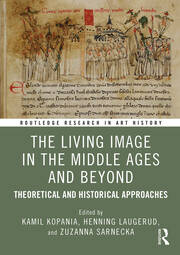
The Living Image in the Middle Ages and Beyond Theoretical and Historical Approaches
List of Figures
List of Contributors
Acknowledgements
Introduction
Zuzanna Sarnecka, Kamil Kopania, and Henning Laugerud
Part I: Principles of Animation
1. Four Fundamental Concepts of Animation: Mechanical and Organic, Supernatural and Phenomenological
Hans Henrik Lohfert Jørgensen
2. Screen, Window, Door: Three Devices to Understand Animation in the Middle Ages
Carla M. Bino
3. ‘To Which the Crucifix Replied’: The Phenomenology of The Animate Image
Peter Dent
4. Mary, Matter, Mother: Re-Thinking the Living Image Through Animism and Materiality in Moments of Crisis, Ritual, and Devotion
Amy Whitehead
Part II: Medieval and Early Modern Animation
5. Blood, Peace, and Cinnabar: Animated Crucifixes and the Bianchi Devotions of 1399
Alexandra R.A. Lee
6. Guillaume de Lorris and the Speaking Image: Personification, Ekphrasis, and Poetic Creation
Hartley R. Miller
7. Ealy Prints in Motion
Joanna Sikorska
8. “I Carve My Figures Fine and Make Them Come to Life”: The Animation of Late Medieval Kleinplastik
Agnieszka Dziki
9. Clothes as Animation Devices: Miracle-Working Images, Enshrinement, and the Production of Matter in Early Modern Portugal
Diana R. Pereira
Part III: Animated Tradition(s)
10. Motion and Emotion: Flying Baptismal Angels in Scandinavia
Elisabeth Andersen
11. Playing (with) Puppets: Jigging Puppets from the Middle Ages to the 20th Century
Francesca Cecconi
12. Thinking with a Figure: Different ways of Animating Sculptures of Saints in Polish Puppet Theatre at the End of the 20th Century
Karol Suszczyński
Index
Biography
Kamil Kopania is Assistant Professor at the A. Zelwerowicz National Academy of Dramatic Art in Warsaw, Poland.
Henning Laugerud is Professor at the University of Bergen, Norway.
Zuzanna Sarnecka is SNSF Ambizione Senior Research Fellow at the Institute of Art History at the University of Bern, Switzerland.
