





1st Edition
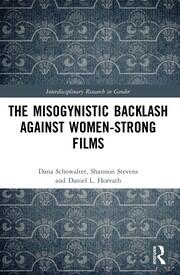
The Misogynistic Backlash Against Women-Strong Films
1. Introduction; 2. Misogyny and the Missive of Mediocrity: Disparaging Women-Strong Films in Movie Reviews; 3. The Economics of Misogyny and the "Surprising" Success of Woman-Strong Films; 4. "None of us asked for this": Ghostbusters, online harassment, and mechanized misogyny; 5. "Why You Should Not Go See ‘Mad Max: Feminist Road’": Parasitic Film Criticism and (Post) Apocalyptic Fears of Feminist Propaganda; 6. Star Wars (Toxic) Nostalgia and The Looming End of Man; 7. Atomic Blonde and Her Critics: Disciplining of a Pre-Patriarchal Feminine Archetype; 8. Conclusion: Counter Publics, Patriarchal (Reel)Realism, and a Call to Action
Biography
Dana Schowalter is Associate Professor of Communication Studies at Western Oregon University. Her research interests include feminist media studies, feminist political economy, and global philanthropy. Her work has been published in Neoliberalism in the Media, Women and Language, and Communication Review.
Shannon Stevens, Associate Professor of Journalism in the Department of English at California State University, Stanislaus, advises the student newspaper. A former journalist, she is a feminist rhetorician who researches media, popular culture, and policy. "The Rhetorical Significance of Gojira: Equipment for Living Through Trauma" appeared in The Atomic Bomb in Japanese Cinema: Critical Essays (2015).
Daniel L. Horvath is a Part-Time Faculty in Communication Studies at California State University, Stanislaus. His research focuses on the way representation warps around critical categories of gender, race, class, etc. He published research on Michael Moore documentaries in Michael Moore and the Rhetoric of Documentary (2015) and on the rhetorical conditions of whistleblowing as a public act of parrhesia in Whistleblowing, Communication and Consequences (2021).
