





1st Edition
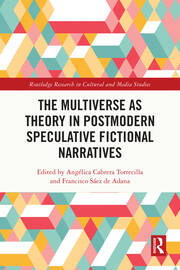
The Multiverse as Theory in Postmodern Speculative Fictional Narratives
1. Introduction
The Multiverse as Fictional Formation
Angélica Cabrera Torrecilla and Francisco Sáez de Adana
2. Towards the Multiverse as a Theory for Speculative Fictions, a Proposal
Angélica Cabrera Torrecilla
PART I The Multiverse as Theoretical Method for Written-Visual Fictions
3 The Quest for Reality as Lost Paradise: Philip K. Dick’s “False Worlds” Series
Alejo Steimberg
4 “Traveling through a Dimension Other than Space:” Multidimensional Consciousness in Molly Cochran’s The Third Magic
Radhia Flah Gaiech
5 The Multiverse as Ontological Catalyst in Sheri S. Tepper’s The Margarets
Stephanie Studzinski
6 Parallel Universes in Superhero Comics
Francisco Sáez de Adana
7 Thursday Next Series: Transmedia Fiction as a “Multi-Media” Multiverse
Carmen Hidalgo-Varo
8 Fighting across Reality: Otherworlds, Parallel Dimensions, and the Multiverse in Martial Arts Fiction
Eduardo González de la Fuente
PART II The Multiverse as Theoretical Method for Audio-Visual Fictions
9 From Representation to Simulation: Narrative Inconsistencies in Cyberspatial Otherworlds
Anna Batori
10 Bridging Multiverse and Media/Video Game Studies: Nobunaga’s Ambition as a Multiverse
Yasuhito Abe
11 The Invisible Affects the Visible: A Socio-Cultural Perspective on the Portrayal of the Spirit and the Physical Worlds in Nigerian and Cameroonian Video Films
Floribert Patrick C. Endong
12 “Okay, Which World do You Think is Real?” – Complex Shared Dream-within-a-Dream Worlds in Doctor Who: “Amy’s Choice” (2010) and “Last Christmas” (2014)
Kathrin Neis
13 Black Mirror: Flat-line Multiverses and Mutations of the Possible
Iván Pintor Iranzo
14 Postface: a A Typology of Multiverse Narratives
Marie-Laure Ryan
Biography
Angélica Cabrera Torrecilla is a postdoctoral researcher at the School of Humanities of Osaka University and member of the National System of Researchers of Mexico. She specialises in the cultural studies of space and time, focusing mainly on the multiverse and techno-digital contexts in fiction and popular culture. She is the author of What if a Multiverse? Literatura y ciencia en la obra de Grant Morrison (2019), and more than 20 published articles and book chapters. She has research experience in Mexico, the United Kingdom, Japan, Germany, and Spain.
Francisco Sáez de Adana is Professor of Computer Science at the Universidad de Alcalá (Spain) and a member of the Franklin Institute of American Studies at the same university. He currently works mainly as a comics scholar, focusing on American comics, and has published book chapters and 20 articles in international journals, including Studies in Comics, Journal of Graphic Novels and Comics, and Journal of Popular Culture.
“This groundbreaking collection of scholarship marks the first systematic, comprehensive volume on the multiverse as theory, heralding the birth of a new interdisciplinary field. Studies address speculative texts and narrative across media from a rich variety of methodological perspectives to apprehend nothing less than the most expansive and ambitious construct of the human imagination – ‘other worlds.’ The global perspective renders insight into the multiverse as treated in texts from North and Latin America to Europe, Japan, and Africa. This book is essential reading for academic specialists, students, and fans alike, who can gain deeper appreciation for the complexity and social implications of this influential cultural form.”
David O. Dowling, PhD, School of Journalism and Mass Communication, The University of Iowa; Author of Podcast Journalism: The Promise and Perils of Audio Reporting (2024).
“This excellent collection on theories of the multiverse explores fundamental questions about our world through the imaginative possibilities of alternatives to it. The focus is admirably broad: taking in science fiction, graphic novels, video games, and television to examine digital space, consciousness, parallel and other worlds, and the nature of reality in both its physical and its spiritual manifestations. Equally diverse are the authors brought together in conversation – revealing new voices from North and Latin America, Europe, Africa, and Asia. Carefully curated by its editors The Multiverse as Theory offers the first studies of the contemporary influence of multiverse thinking and its epistemic limits.”
Martin Willis, Professor, School of English, Communication and Philosophy, Cardiff University.
“This book, edited by Cabrera Torrecilla and Sáez de Adana, brings together a series of fundamental contributions to understand the key role that the concept of multiverse plays in modern and postmodern fictional narratives.”
Gerardo Blumenkratz, Chair, Media & Communication Arts Department, City College of New York, City University of New York.
