





1st Edition
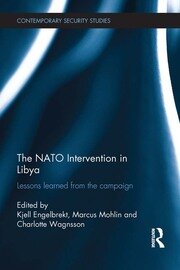
The NATO Intervention in Libya Lessons learned from the campaign
Preface, John Andreas Olsen Introduction, Kjell Engelbrekt and Charlotte Wagnsson Part I: The Law & Politics of Intervention 1. Able but Not Willing: A critical assessment of NATO’s Libya Intervention, Jeffrey H. Michaels 2. Why Libya? Security Council Resolution 1973 and the Politics of Justification, Kjell Engelbrekt 3. A legal view on NATO’s campaign in Libya, Fredrik A. Holst and Martin Fink Part II: The Military Campaign 4. Executing Strategy from the Air, Anders Nygren 5. Naval operations during the 2011 Libya campaign, Christian Wollert 6. Fragments of an Army – three aspects of the Libya collapse, Karl Sörenson and Nima Damidez Part III: Auxiliary Measures and Arrangements 7. Managing Perceptions: Strategic communication and the story of success in Libya, Rikke Bjerg Jensen 8. Cloak and Dagger in Libya: The Thuwar and the Role of Allied Special Forces, Marcus Mohlin 9. Conclusion: Lessons and Consequences of Operation Unified Protector, Robert Egnell
Biography
Kjell Engelbrekt is Associate Professor of Political Science at the Swedish National Defence College and member of the Royal Swedish Academy of War Sciences.
Marcus Mohlin is a Commander in the Swedish Navy. He also holds a Ph.D. in Military Sciences and is currently a Researcher at the Swedish National Defence College.
Charlotte Wagnsson is Professor of Political Science at the Swedish National Defence College; she received her Ph.D. in Political Science from Stockholm University.
