




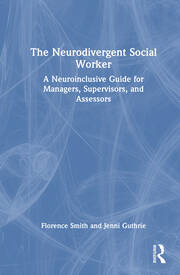
1st Edition
The Neurodivergent Social Worker A Neuroinclusive Guide for Managers, Supervisors, and Assessors
1.Introduction 2.Neurodiversity: A brief history and current concepts 3.Rethinking Knowledge – Critical Neurodiversity Theories in Social Work Education and Practice 4.Hidden Voices and the organisational risk context 5.Why social work needs neurodivergence 6.The trauma of the everyday 7.Capability, Performance, and Affirming Practice in Social Work Management 8.Advocacy and Developing Affirming Relationships 9.The art of communication through a practice education lens 10.Neuroinclusive Supervision 11.The neurodivergent leader 12.Concluding Reflections: Reaffirming the Paradigm Shift Appendix
Biography
Florence Smith is a registered social worker and has worked with children and families in a variety of settings. Florence is a practice educator with expertise in supporting neurodivergent student social workers. Drawing on her own lived experience of multiple neurodivergences, she works as an independent trainer and consultant through Neuro Inclusive Solutions, integrating research and lived experience insights to advance neuroinclusive practice.
Jenni Guthrie is an AuDHD+ registered social worker, practice educator, and researcher, currently working as a Senior Lecturer in social work at the University of Winchester, UK. Jenni currently leads the BASW neurodivergent student and newly qualified social worker group and is chair of trustees to the charity Autistic Parents UK. Like Florence, Jenni is a co-director of Neuro Inclusive Solutions. Lived experience in personal and professional contexts informs all aspects of their work.
"This book is brilliant and so needed! It tackles neurodivergence in social work wholeheartedly and with academic rigour. This book is essential reading that offers a fresh perspective, making this an indispensable resource for social work leaders and as a connecting space for social workers in practice."
Dr Lisa Cherry, Education and Children’s Services specialist, author of 'Conversations that make a difference for Children and Young People' (2021)
“Awareness of neurodivergence is growing within social work, yet there has been a striking lack of resources that deepen understanding and support humane, helpful practice. This outstanding, landmark book fills that gap. It is essential reading for practitioners, managers, educators and experts by experience alike. As a neurotypical reader, I found it challenging and deeply informative, precisely the transformational shift in perspective social work now needs.”
Harry Ferguson, Emeritus Professor of Social Work, University of Birmingham, UK
“Grounded in research and rich with insight, this book was both affirming and thought‑provoking for me as a neurodivergent leader. It prompted meaningful reflection on my own career while offering clear, practical guidance for shaping neuroinclusive organisations and supporting personal development. An essential read for the world of social work and beyond.”
Kate Concannon, Deputy Director of Adult Social Care, Royal Borough of Windsor and Maidenhead, and former Co‑Chair of the National Principal Social Worker Network
“A highly recommended read for social work leaders, managers and practice educators looking to deepen their understanding of the neuroinclusive perspective. Filled with authentic practice examples that show how deficit narratives continually undermine the social work field. Importantly, the authors offer reflexive solutions to broaden comprehension and application of relevant frameworks and standards. This book is an excellent starting point for anyone aiming to incorporate a neuroaffirming approach into their practice and organisational culture.”
Agnieszka M. Fearne, Master of Social Work Programme Lead, Kingston University London, UK
