




1st Edition
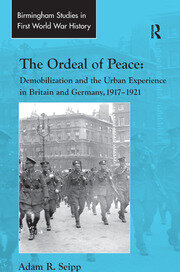
The Ordeal of Peace Demobilization and the Urban Experience in Britain and Germany, 1917–1921
By Adam R. Seipp
Copyright 2009
308 Pages
by
Routledge
306 Pages
by
Routledge
306 Pages
by
Routledge
Also available as eBook on:
Historians know a great deal about how wars begin, but far less about how they end. Whilst much has been written about the forces, passions, and institutions that mobilized societies for war and worked to sustain that mobilization through years of struggle, much less is known about the equally complex processes that demobilized societies in the wake of armed conflict. As such, this new book will... Read more
Contents: Introduction: Munich, Manchester, and the demobilization of Europe. 1917-1921; Manchester. Munich, and urban Europe in 1914. Section I Visions of the End: 1917-18 and the Beginnings of Demobilization: 'Do something!': Manchester in transition and war, 1917-18; An immeasurable sacrifice of blood and treasure: Munich at war, 1917-18. Section II 'The Man Afterwards Changed Completely': Demobilizations, Homecomings, and Transformations: 'The fabric of Europe and the world was being remade': the Armistice and after in Manchester; 'We don't want gratitude, we want our rights': demobilization, violence, and politics in Munich, 1919. Section III 'The Dregs of this Bitter Chalice': Crisis and the End of Demobilization, 1920-1921: 'Ordeal by peace': Manchester 1920-21; Scapegoats for a lost war; the crisis of demobilization in Munich, 1920-21; Conclusion: ending and beginning again; Bibliography; Index.
Biography
Adam R. Seipp is an Assistant Professor of History at Texas A&M University, USA
’The Ordeal of Peace is a monument to careful scholarship... Seipp has produced an admirable work that not only broadens our understanding of demobilization, but also shows the promising possibilities for transnational comparisons of urban experiences in war or peace.’ Urban History 'This book is thoroughly researched and makes use of a wide variety of archival and published sources... Seipp’s perspective on the ways that wartime institutions and cultures influenced the post-war years is a welcome addition to the field of First World War studies and deserves a wide readership.' European History Quarterly
